

We know what’s coming and we are prepared.

🧬 Genetics firm 23andMe confirms user data theft in a credential stuffing attack.
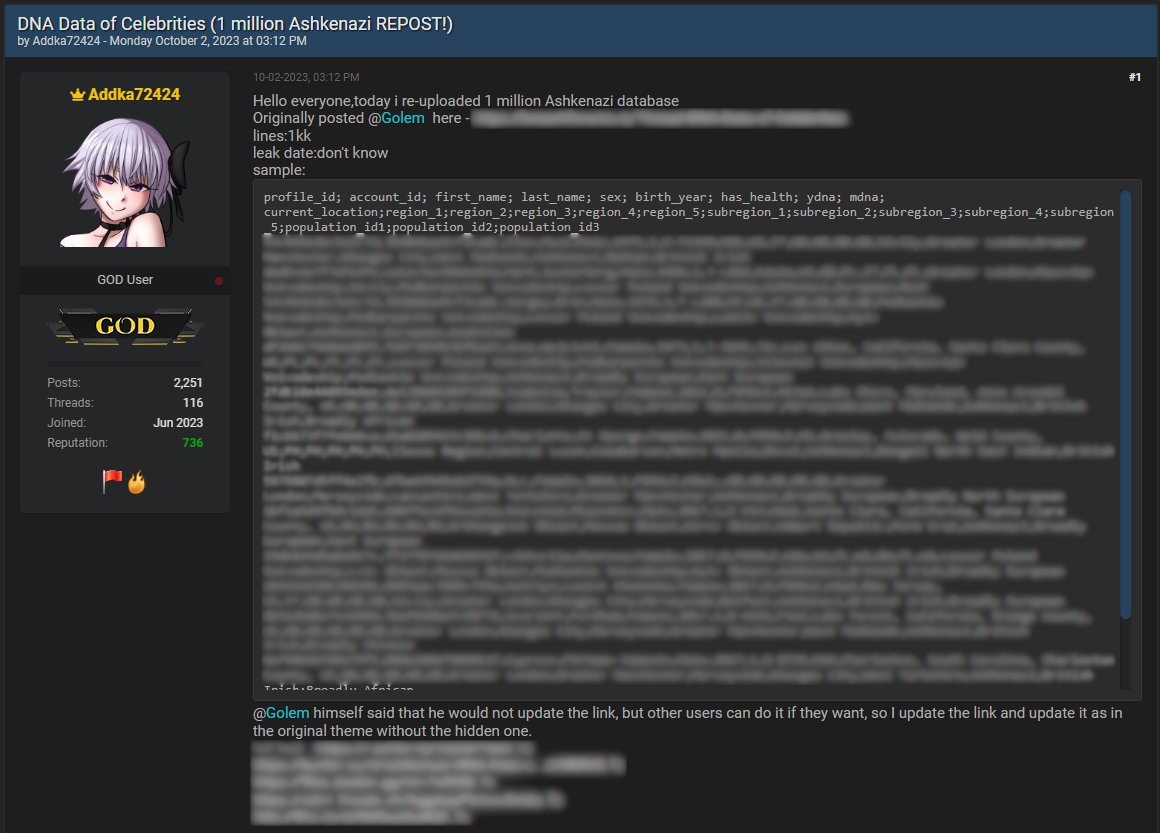
✡️ The hackers released 1 million lines of data targeting Ashkenazi Jews.
23andMe, a renowned U.S. biotech & genomics firm, offers genetic testing services.
A threat actor recently leaked data samples from the firm and is now selling 23andMe customer data packs.
The initial data leak was limited but deeply concerning.
The threat actor released 1 million lines of data specifically for Ashkenazi people.
This targeted attack raises serious questions about the motive behind the breach.
On October 4, the hacker offered to sell data profiles in bulk, ranging from $1-$10 per 23andMe account, depending on the quantity purchased.
23andMe's RESPONSE: The company confirmed the data's legitimacy. They believe the hackers used credentials from other breaches to access 23andMe accounts.
"We do not have any indication at this time that there has been a data security incident within our systems."
The leaked data includes full names, usernames, profile photos, sex, date of birth, genetic ancestry results, and geographical location.
This is a goldmine for identity thieves and malicious actors.
The compromised accounts had opted into the platform's 'DNA Relatives' feature.
The hacker accessed a few 23andMe accounts and scraped the data of their DNA Relative matches, showing the potential risks of such features.
23andMe offers two-factor authentication and urges all users to enable it.
It's a reminder for everyone to refrain from reusing passwords and to always use strong, unique credentials.

🇲🇽- Mexican Cartel Drone Operator seen stalking a Mexican Marine Convoy in Mazatlán.
This isn’t much of a surprise, Cartel members have reportedly been joining the Ukrainian Foreign Legions en masse to hone drone operation and close quarters combat skills.
Since many of them are starting to return home, and now training other members of their cartels, i wouldn’t be shocked to see a new level of militarization in these organizations.
My jaw literally dropped listening to this
There is a Muslim pilot who works for United Airlines that regularly makes pro-terrorist organizations posts on his social media
The Muslims name is Ibrahim Mossallam. He works on the Board of CAIR New York, which is linked to the Muslim Brotherhood
He made an October 7, 2023 Facebook post calling the Hamas attacks “resistance by a brave people.” United suspended him with pay while investigating but the Pilots Union got him his job back and he went back to flying planes in America
Since then the pilot has been temporarily resuspended for flying because of his extreme religious beliefs and posts but he is 100% still employed. He is still getting paid on suspension
I looked into this guy and he is VERY involved in Muslim organizations
- CAIR-NY lists him as Board Vice-President and describes him as a professional international airline pilot who is “very active in shaping the Muslim youth community.”
- He has also been listed as a board ...
From Nic Hulscher:
We found COVID “vaccine” genetic code FUSED into chromosome 19 of a Stage IV turbo cancer victim.
This is the first peer-reviewed study showing that COVID shot DNA can integrate into the human genome.
Human beings should NOT have Pfizer or Moderna DNA in their tumors.
Study Link: https://ijirms.in/index.php/ijirms/article/view/2130
Follow @zeeemedia
Website | X | Instagram | Rumble
BREAKING: James Talarico Was in Ohio Mental Health Hospital During Mysterious Disappearance (AUDIO)
https://www.thegatewaypundit.com/2026/10/breaking-james-talarico-was-ohio-mental-health-facility/
HUH? Mental Hospital Denies Talarico Received Treatment After Claiming They Would “Never Disclose, Confirm, or Deny Who Our Patients Are Here”
https://www.thegatewaypundit.com/2026/10/update-mental-hospital-claims-talarico-has-never-received/