

We know what’s coming and we are prepared.

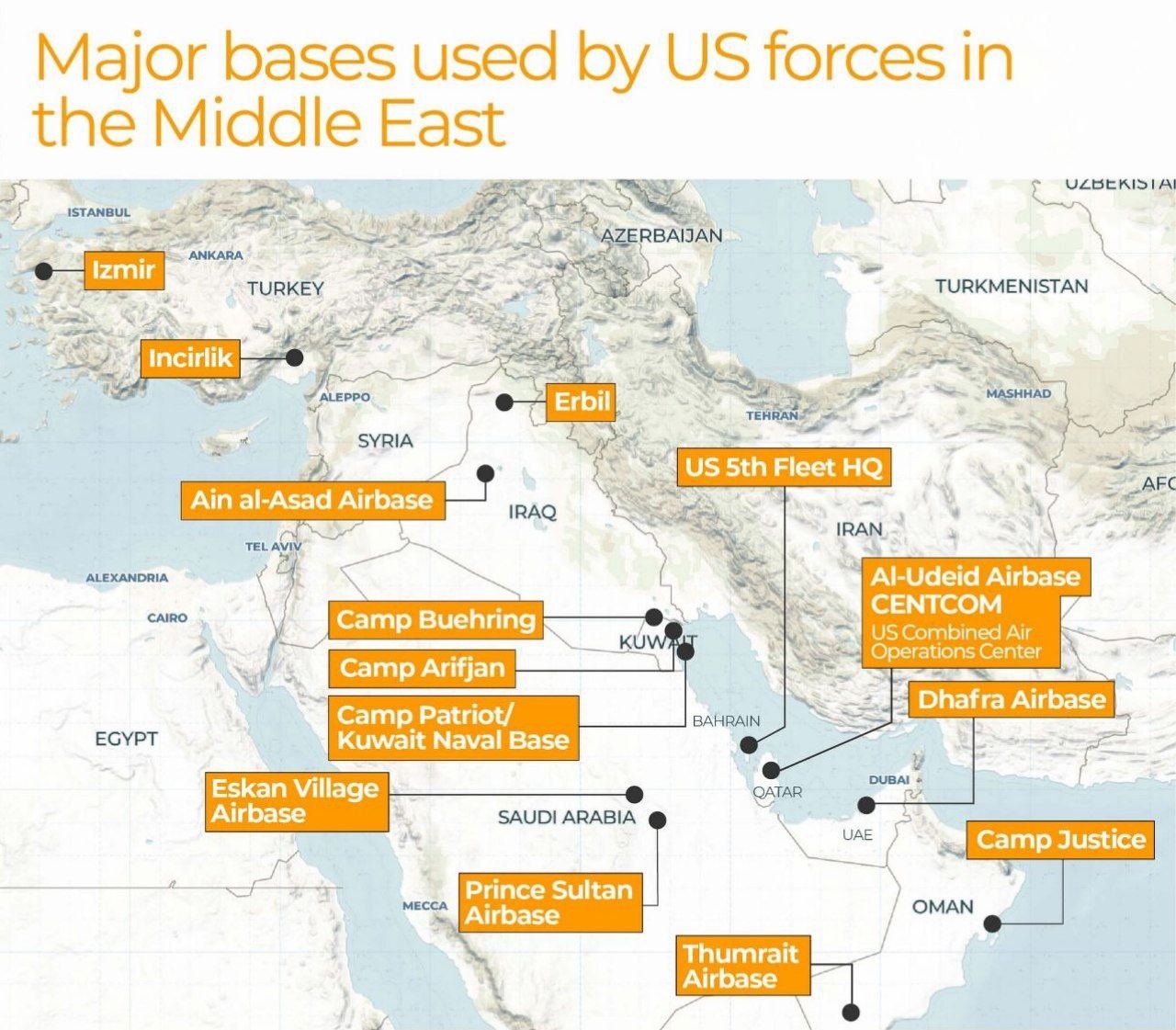
⚡️🇺🇸 The US has roughly around 50,000 troops deployed across the Middle East. With large bases from Syria to the Gulf. The Al-Harir Airbase in Erbil, Iraqi Kurdistan recently came under drone attack. Tashkil al-Waritheen claimed responsibility for the attacks. The US has also deployed 2 CSGs in the Mediterranean. (The USN map is from 4 days ago, we can assume the Eisenhower is on route to its destination in the Mediterranean)
@themediterraneanman

📢 🇬🇧 🥫 Britain has urged households to stock enough water, non-perishable food and medicine to be self-sufficient for three days, launching a new “Be Ready” preparedness campaign.
Government guidance recommends about three liters of drinking water per person per day, food that needs no refrigeration or cooking, essential medications, a first-aid kit, a torch, a battery or wind-up radio, a charged power bank and cash.
Officials cited severe storms, wildfires, cyberattacks and supply chain disruptions as the main risks, with Defence Secretary Wes Streeting pointing to “increasingly sophisticated cyber attacks” and scenarios such as supermarket payment systems going down.
Germany has long gone further, recommending households keep emergency supplies for 10 days, including about two liters of liquid per person per day.
📝 ReadyGuidance: "Worth noting the US version of this advice, at Ready.gov, is one gallon of water per person per day, about 3.8 liters, because ...
🇮🇹 Italy Experiences Food and Fuel Shortages After Truckers on Strike Block Roads. 90% of gas stations in Campania are out of fuel
Truckers protesting high gas prices have prevented deliveries to parts of southern Italy, leading to empty shelves and dry pumps.
On Wednesday night in Naples, Italy, a 72-year-old retiree walked into a supermarket to buy himself a snack and found it nearly bare.
It was out of milk, yogurt and eggs. Its shelves of pasta, oils and canned tomatoes were almost empty. The vast produce section was empty save for red onions, chestnuts, two melons and a case of ornamental gourds.
“It’s worse than I expected,” said Giuseppe Crisci, the retiree, who walked out with a bag of biscuits. “And what I expected was exceptional.”
Experiences like Mr. Crisci’s played out repeatedly this week across Naples, a sprawling port city in Italy’s south where residents faced widespread shortages at their gas pumps and grocery stores.
It is the fallout from a week of...
🇺🇸🗳⚡️- RN's Midterm Forecast With A Week And A Half To Go 3/3:
Why we think this election will be the first real nail in the coffin for Trumpism.
It has been said so many times it's become a meme, “the walls are closing in” “No way he wiggles out of this jam!” etc. This time it's not a joke, the armor that Trump has had around him for a decade is clearly slipping off.
Trump’s approval by his own 2024 voters continues to rapidly decline, damaged by the nonstop rampant corruption and the Iran War.
Trump approval within the GOP, despite remaining strong on paper, is actually at its lowest since 2015 before he won the 2016 primary. The Iran War in particular has nuked his bedrock fanatical support within the GOP base when looking at not only surveys but also via multiple anecdotes on AM radio talk shows who get callers every day saying they feel betrayed by the war, and that the corruption is becoming unignorable.
GOP activists at the local level are also reporting to their ...