

We know what’s coming and we are prepared.

🇺🇸 💵 The Potemkin Village Economics of Late Liberalism
⬛️ Macroeconomist Philip Pilkington examines the similarities between the economics of Brezhnev’s late-soviet economy and Biden’s version of the same downward spiral.
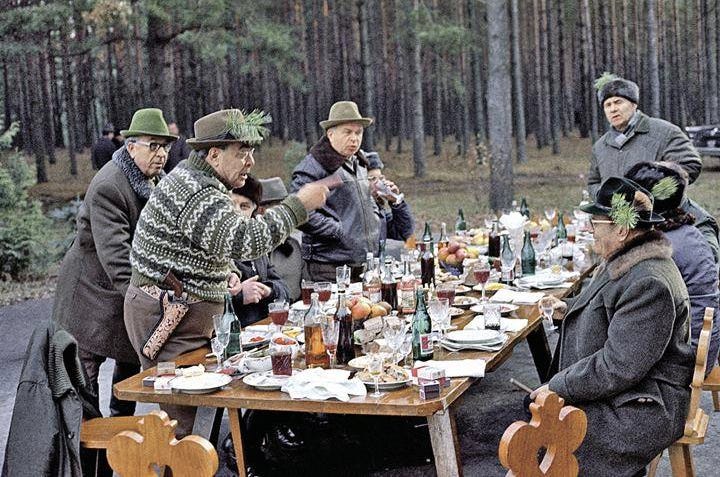
🔶️ Living under the late-Soviet model was not typically experienced as nightmarish or even scary, but rather as silly and fake. It was a sort of “clown world”, to quote a well-known contemporary trope, where nothing worked, and leaders were not taken seriously. This is captured in a popular Soviet joke of the time. It runs like this: Stalin, Khruschev, and Brezhnev are on a train going to the Russian countryside but suddenly it stops. As the engineer and the driver attempt to work out the problem Stalin gets angry and starts to shout: “I will solve this. Send the driver to the gulag for being an ideological deviationist and shoot the engineer for being a capitalist saboteur!” The trio wait for the train to shunt into action, but it does not move. Khruschev strokes his chin and then pipes up: “This is not right, let’s release the driver from the gulag.” But without an engineer, the train still fails to move. At that moment, Brezhnev takes a large shot of vodka, smiles, and says: “Comrades! No need to worry! Pull down the window shades and let’s start rocking the train from side to side!”
🔶️ If all of this sounds remarkably familiar, it should. It sounds increasingly like our contemporary experience of late liberalism. Although the popularity of alcohol seems to have given way to the widespread use of marijuana and psychedelics – not to mention the horrifying proliferation of opiates, a nihilistic death-plague the likes of which even the Soviet Union never experienced. The profusion of ‘memes’ in our era bears a striking resemblance to the ‘samizdat’ – or unofficial, self-published cultural production – that spread in the late Soviet Union. The election of eccentric political leaders like Donald Trump or Javier Milei, who reflect the prevailing cultural cynicism of their supporters, seems exactly like what would have happened were the Soviet Union an electoral democracy in the late-1970s.
🔶️ Are we so deep into late liberal decline that the authorities are simply making the numbers up? There has been an unusual amount of data revisions these past two years, but it seems unlikely that these explain the booming GDP growth numbers. Rather the GDP numbers seem to be explained by the fact that the Biden Administration is running enormous government fiscal deficits. Recent estimates put the fiscal deficit at 8.6% of GDP in 2023. Outside of the unprecedented response to the COVID-19 pandemic, these sorts of budget deficits are associated with deep recession of the sort we saw in 2008-09. But GDP numbers are telling us something deeply counterintuitive, namely that the economy is not in deep recession aren’t wrong, but is booming. What is going on? Simply put, the government deficit is propping up the economy like a puppeteer holding up a marionette.
https://www.postliberalorder.com/p/the-potemkin-village-economics-of
If you missed it👇
Top AI Executives are now officially anticipating a large-scale event, most likely a cyberattack, that shuts down access to financial services, internet connectivity, and even power and water. We need to prepare for this scenario right now.
Watch here:
Follow @zeeemedia
Website | X | Instagram | Rumble