

We know what’s coming and we are prepared.

🇺🇸❌🇾🇪 US Navy aircraft carrier faces relentless battle against Houthi attacks
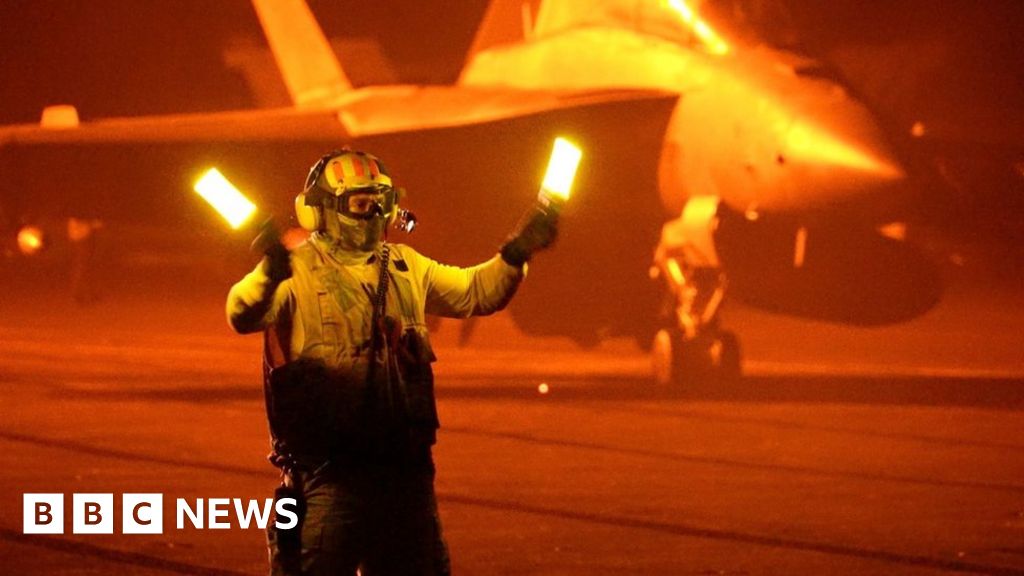
It's not just merchant ships being targeted by the Houthis in the Red Sea. The US carrier strike group trying to protect them has also been under constant threat too.
Captain Wroe lists the threats they've been facing over the past four months: anti-ship ballistic missiles, cruise missiles, unmanned aerial vehicles, unmanned surface vessels, and now unmanned underwater vessels, or UUVs, all loaded with explosives.
UUVs are the latest threat. He says the F-18 jets on board the carrier have recently destroyed UUVs, before they could be launched.
Captain Wroe says the Houthis have posed the greatest challenge to the US Navy in recent history.
"This is the most since World War Two," he says. That was the last time the US operated in an area where they could be fired upon every day.
Up in the carrier's flight control tower, Commander George Zintac, known as the Air Boss, is having to choreograph their movements - with a jet either launching or landing in just over a minute.
He's been in the US Navy for more than 30 years, but says "this is probably the most flying I've done on a deployment - everyday we're flying a tonne".
🇲🇽- Mexican Cartel Drone Operator seen stalking a Mexican Marine Convoy in Mazatlán.
This isn’t much of a surprise, Cartel members have reportedly been joining the Ukrainian Foreign Legions en masse to hone drone operation and close quarters combat skills.
Since many of them are starting to return home, and now training other members of their cartels, i wouldn’t be shocked to see a new level of militarization in these organizations.
My jaw literally dropped listening to this
There is a Muslim pilot who works for United Airlines that regularly makes pro-terrorist organizations posts on his social media
The Muslims name is Ibrahim Mossallam. He works on the Board of CAIR New York, which is linked to the Muslim Brotherhood
He made an October 7, 2023 Facebook post calling the Hamas attacks “resistance by a brave people.” United suspended him with pay while investigating but the Pilots Union got him his job back and he went back to flying planes in America
Since then the pilot has been temporarily resuspended for flying because of his extreme religious beliefs and posts but he is 100% still employed. He is still getting paid on suspension
I looked into this guy and he is VERY involved in Muslim organizations
- CAIR-NY lists him as Board Vice-President and describes him as a professional international airline pilot who is “very active in shaping the Muslim youth community.”
- He has also been listed as a board ...
From Nic Hulscher:
We found COVID “vaccine” genetic code FUSED into chromosome 19 of a Stage IV turbo cancer victim.
This is the first peer-reviewed study showing that COVID shot DNA can integrate into the human genome.
Human beings should NOT have Pfizer or Moderna DNA in their tumors.
Study Link: https://ijirms.in/index.php/ijirms/article/view/2130
Follow @zeeemedia
Website | X | Instagram | Rumble
BREAKING: James Talarico Was in Ohio Mental Health Hospital During Mysterious Disappearance (AUDIO)
https://www.thegatewaypundit.com/2026/10/breaking-james-talarico-was-ohio-mental-health-facility/
HUH? Mental Hospital Denies Talarico Received Treatment After Claiming They Would “Never Disclose, Confirm, or Deny Who Our Patients Are Here”
https://www.thegatewaypundit.com/2026/10/update-mental-hospital-claims-talarico-has-never-received/