
We know what’s coming and we are prepared.

Recently, national media outlets have curiously chosen to take a particular line out of context.
Over the weekend, in Ohio, Trump took to the stage and spoke at length in his characteristic powerful style.
This is a lengthy quote from that speech to read, but here’s what he said:
“Let me tell you something, to China, if you’re listening, President Xi … those big, monster car manufacturing plants that you’re building in Mexico right now, and you think you’re going to get that, you’re going to not hire Americans and you’re going to sell the cars to us? We’re going to put a 100% tariff on every single car that comes across the line, and you’re not going to be able to sell those guys if I get elected. Now, if I don’t get elected, it’s going to be a bloodbath for the whole — that’s gonna be the least of it. It’s going to be a bloodbath for the country. That’ll be the least of it. But they’re not going to sell those cars, they’re building massive factories.”
Read or heard in full, it’s not a particularly complicated line of rhetoric from the former president.
Trump is appealing to auto workers with promises to keep the American car-making industry competitive by imposing very costly taxes (tariffs) on imported vehicles.
The Biden campaign posted March 16 on X: “Donald Trump said there would be a ‘bloodbath’ if he wasn’t elected and that if he lost there would be no more elections.” The next day, Biden’s account shared on X the “bloodbath” clip and wrote, “It’s clear this guy wants another January 6.
Politicians, pundits and social media users debated Trump’s “bloodbath” remark in the days following the speech. Some major news outlets including The New York Times, ABC and The Associated Press wrote that Trump warned of a “bloodbath” in headlines without the auto industry context. Although the text of the articles explained the context, when headlines alone are shared on social media, it doesn’t tell the full story.
But that wasn’t enough as Google just quietly changed its search results for “bloodbath definition” and it looks funny
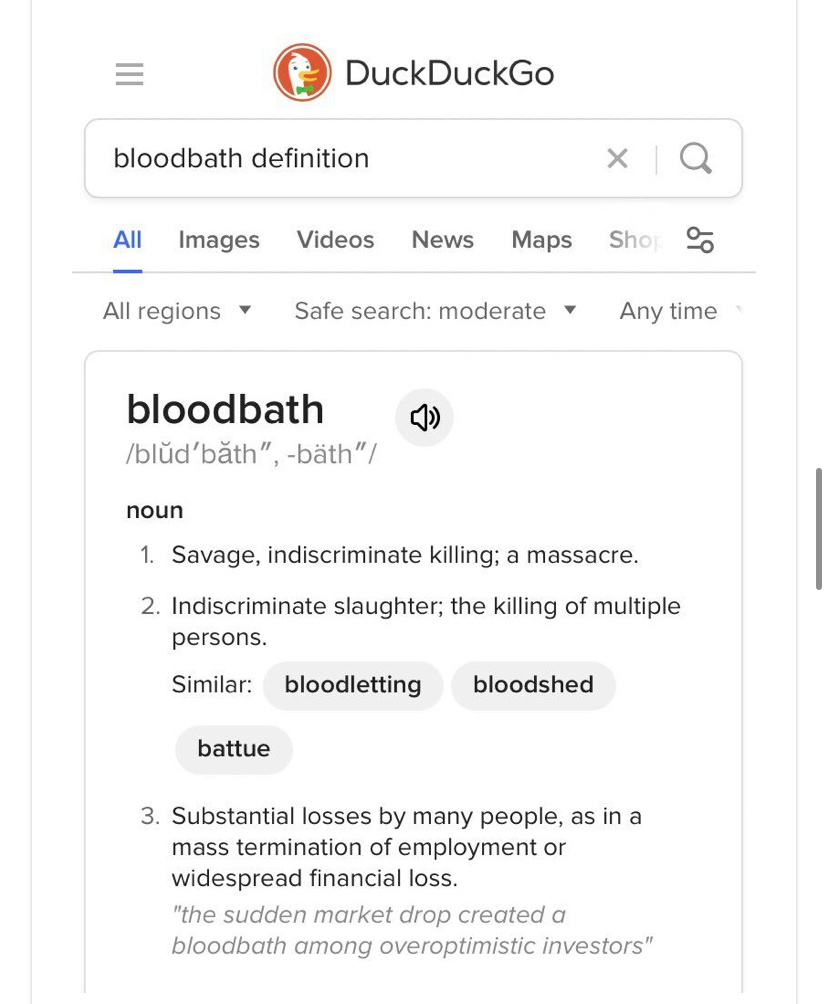
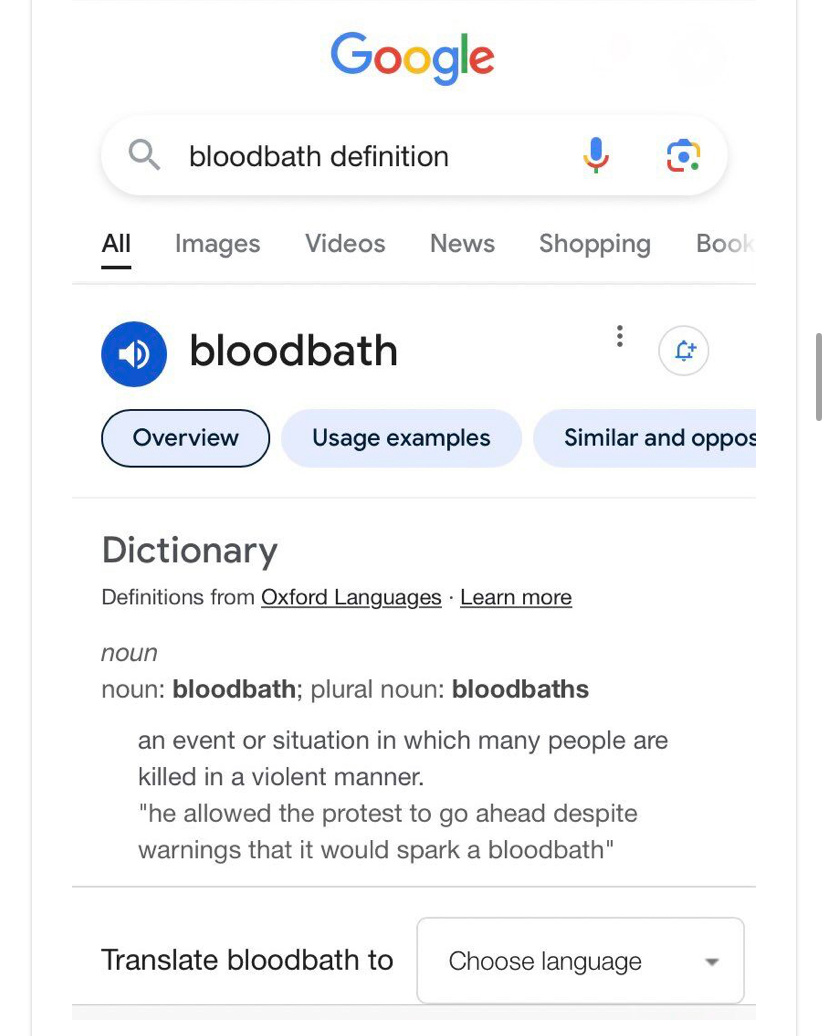
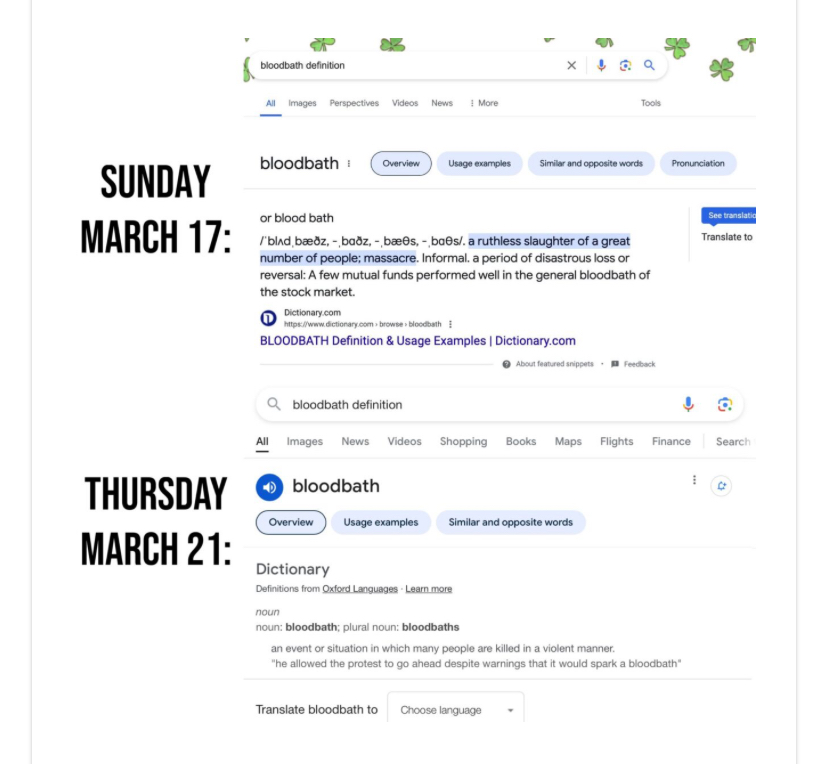
If you missed it👇
Top AI Executives are now officially anticipating a large-scale event, most likely a cyberattack, that shuts down access to financial services, internet connectivity, and even power and water. We need to prepare for this scenario right now.
Watch here:
Follow @zeeemedia
Website | X | Instagram | Rumble