
We know what’s coming and we are prepared.

Reposting - It’s fashion week again:
They’re not just celebrities.
They’re vessels.
What you’re seeing is not fashion, it’s a ritual. A manifestation.
These grotesque outfits and lifeless faces aren’t random.
They’re symptoms of something deeper:
a mental parasite expressing itself through human bodies.
This parasite has no soul, no gender, no form.
It cannot exist alone, it needs a host.
And once it enters, it hijacks.
It speaks through you. Thinks through you. Dresses through you.
That’s what’s happening in front of our eyes.
Pop culture, fashion, “trends”…
They’re not human creations.
They’re tools of mass programming, designed to make you mimic the parasite until it fully replaces you.
These scripted realities, your idols, your influencers, they’re just vessels. Empty dishes.
Hosts for an agenda that is not human.
Be careful what you admire.
Be careful what you wear.
Learn the patterns. Learn the programming.
Because the ones pulling the strings are ...
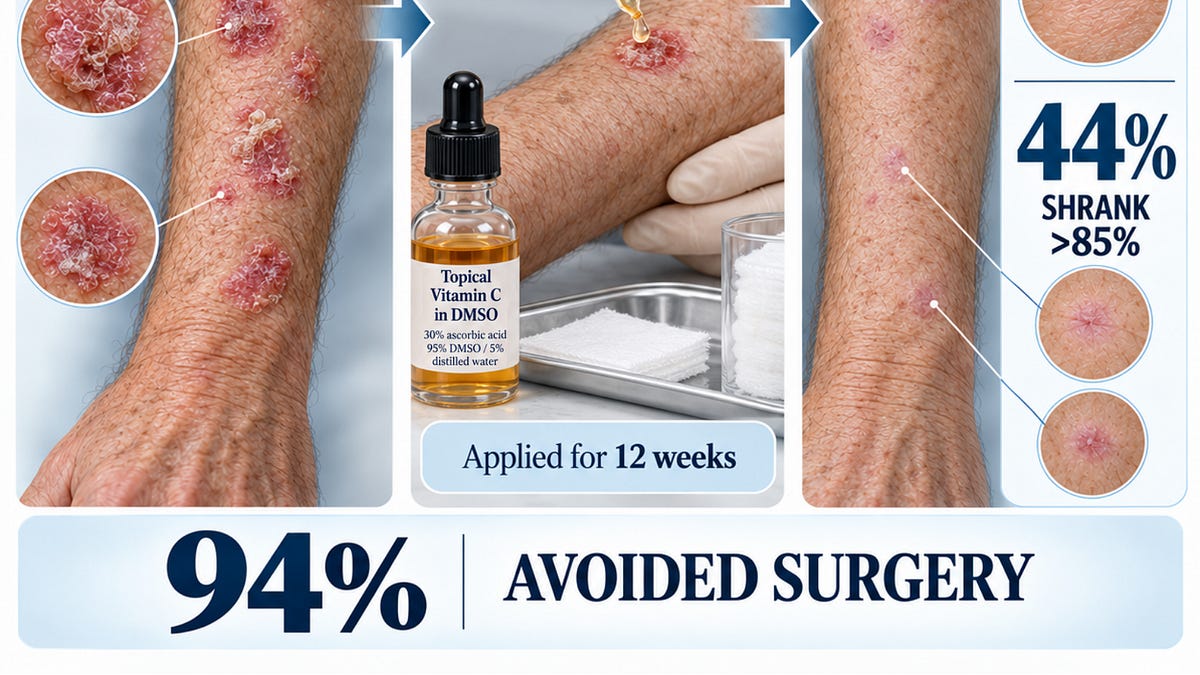
NEW STUDY: Topical vitamin C in DMSO completely ELIMINATED 56% of biopsy-confirmed skin cancers in just 12 weeks.
44% of the squamous cell carcinoma lesions SHRANK by over 85%.
94% of patients were able to AVOID surgery.
The average cancer lesion size dropped 71%.
The treatment was 30% ascorbic acid in a 95% DMSO/5% distilled-water solution, applied twice daily for 12 weeks.
DMSO was used as a skin-penetration enhancer, helping the vitamin C pass through the outer skin barrier and reach the lesion more effectively.
https://www.thefocalpoints.com/p/study-topical-vitamin-c-in-dmso-eliminated
Follow @zeeemedia
Website | X | Instagram | Rumble