

We know what’s coming and we are prepared.

🌍 The cost of leaching copper oxide ore in the Central African Copperbelt is about to get even more expensive.
In the past few days a number of Middle Eastern Oil refineries have been attacked / closed. In addition, exports through the Strait of Hormuz have ground to a halt.
What has this got to do with leaching copper in one of the world’s largest copper belts ? Sulphur, or more specifically sulphuric acid.
Approximately, 50% of seaborne sulphur is shipped through the Strait of Hormuz.
90% of sulphur imported into Africa is from the Middle East… and therefore passes through the Strait of Hormuz
The central African Copperbelt imports around 2 million tonnes of this sulphur per annum. The sulphur is used in local sulphur burners to convert into sulphuric acid, which is used by mining companies for leaching copper out of copper oxide ores. One part of sulphur makes 3 parts of liquid high-strength sulphuric acid. Therefore, 2.0 million tonnes of sulphur produces approximately 6.0 million tonnes of sulphuric acid.
The price of high-strength sulphuric in Kolwezi, on the western edge of the DRC Copperbelt, has been trading near all-time highs of $700-$800/tonne for the past 4-5 months, due to regional export restrictions, higher copper prices, as well as an already tight global sulphur market. This price will rise further.
I have heard that traders are already struggling to source any. Sulphuric acid prices will therefore significantly increase across Africa… and if the disruption lasts longer than ~3 weeks, copper oxide operations will have to close as they’ve run out of acid.
Oxide copper is the dominant ore source of copper produced in DRC… and the DRC is the world’s 2nd largest copper producer.
🔗 Robert Friedland
Scientists have now developed a way to genetically engineer lettuce with pig DNA to make plant-based meat taste like meat
The is a new 2026 study that inserted pig myoglobin genes into lettuce chloroplasts, which persisted in the lettuce grown from the harvested seeds. “This research follows the British company Moolec, which inserts pig DNA into soybeans to create what they call piggy soy”
‘Since this is all considered gene editing and not genetic modification, it bypasses most regulation and can be sold with little restrictions’
I have no words for how depraved the minds of these Christ-hating transhumanist idiots are.
Follow @zeeemedia
Website | X | Instagram | Rumble
“In every single dose of an MMR shot, there are literally, literally millions of pieces from the cultured cell line of an aborted fetus in every single injection.” — AARON SIRI
THIS IS WHY RELIGIOUS EXEMPTIONS MATTER.
Yet in states that have eliminated religious exemptions, parents can be forced to choose between violating their religious and ethical beliefs and their child’s ability to attend school.
🇺🇸Join👉 @SGTnewsNetwork
📎 X (Twitter)▪️Truth Social
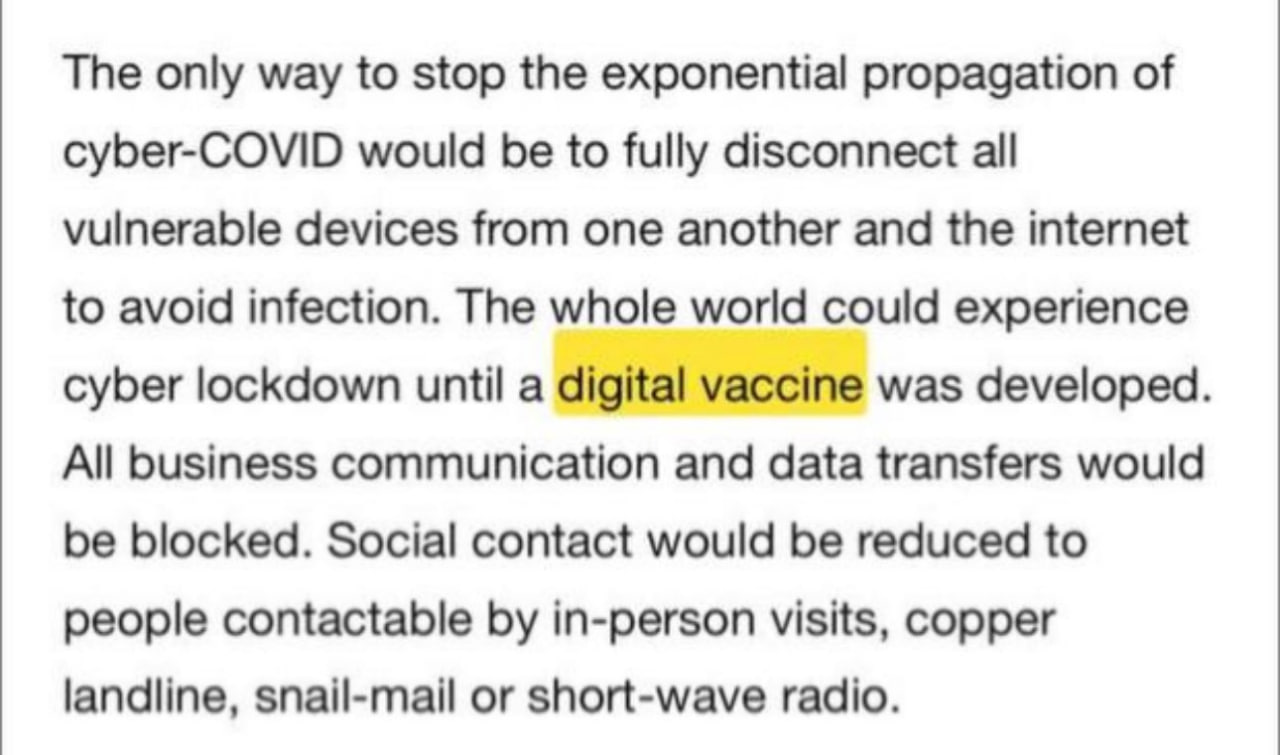
The WEF states that when a global cyber outage occurs from “Cyber COVID”, the whole world could (AKA will) go into cyber lockdown until a “digital vaccine” is developed.
This seems important to raise again when the tech lizards are screaming about an AI apocalypse in unison right now.
Follow @zeeemedia
Website | X | Instagram | Rumble
The Netherlands government has killed a 2-year-old baby, just one year after the country legalized euthanasia for children under 12.
In 2025, 10,341 people in the Netherlands were euthanized, up nearly 4% from the year before.
According to the Assessment Committee for Late Termination of Pregnancy and Termination of Life in Newborns and Children Aged 1 to 12 Years, the baby had "both mental and physical" disabilities, so they decided it was best to kill the child.
"The child had multiple, very severe disabilities, both mental and physical, and the prognosis was that the child would be dependent on support with all activities of daily living for the rest of their life."
After getting consent from the child's parents, the baby was killed.
https://nltimes.nl/2026/09/09/first-ever-case-euthanasia-young-child-2-handled-well-dutch-committee
Follow @zeeemedia
Website | X | Instagram | Rumble