

We know what’s coming and we are prepared.

🇮🇱🇺🇸⚔️🇮🇷 Let's take a step back and consider the bigger picture.
Strategic goals on day one of the war:
• Israel: eliminate Iran and Hezbollah as threats to Israel
• Iran: survive, deter future aggression
Fast forward to today, six weeks in, and it's obvious the Israeli war effort has failed. Their ideal state for Iran is Balkanization, or a second Syria, unable to mount any cohesive efforts against Israel. But the Iranian state remains stable, the regime change attempts failed. The IDF again failed to do more than push a few miles into Lebanon. Whatever the Israelis were attempting to do to destroy Hezbollah with the cooperation of the Lebanese government also seems to have failed. And Hezbollah seems much stronger than anyone assumed before this conflict.
The Israeli ability to achieve these goals hinged on sucking the US into maximal commitment in war against Iran. A second GWOT would have been ideal, with the US bogged down in Iran for years or even decades. At the moment, this too seems to have failed.
While Iran has suffered substantial damage to its infrastructure, its government has survived. But what about its second goal, deterrence? Here's how things have changed since the start of this conflict:
• US bases in the Gulf region have been largely abandoned, many have suffered heavy damage ("uninhabitable" according to the NYT). The US has completely withdrawn from Syria and mostly withdrawn from Iraq. This is an unprecedented retreat.
• The US radar network that protects Israel and the Gulf states has been mostly destroyed
• Iran has demonstrated that it's both able and willing to light the region on fire and blockade it if threatened
• They've also demonstrated that their state is strong enough to withstand a major air US campaign
• The passage for ships through the Strait of Hormuz has been reduced from a 21mi wide corridor to one that's only ~3mi wide, between Larak and Qeshm. This makes future closures of the strait trivial. Even a small team of a few dozen IRGC personnel can now shut off 20% of global oil flows
• The broader political balance in the region is now up in the air. The GCC has suffered enormous economic damage. A new security architecture may emerge in response to this, possibly one that favors Iran
This is an improved position for Iran as compared to before the conflict, which is remarkable. They've made it clear that there's no reasonable path to the US/Israeli strategic goals. Continuing the air campaign or some kind of limited land invasion won't move the needle. If the air campaign didn't work before, it's even less likely to work now.
Now that we're in a period of diplomacy, the Iranians are attempting to secure the long-term consolidation of their gains. They also stand a chance of extracting some incredible concessions:
• International acceptance of a toll regime on the strait
• The lifting of (some) sanctions
• Unfreezing of billions in Iranian funds (most of which are currently stored in Qatar)
• Normalization of relations with various states in Europe and Asia
If the Iranians play this game correctly, they can achieve some or all of these things while suffering no casualties (this is the power of diplomacy). The key to this is driving a wedge, no matter how minor, between the US and Israel. By refusing to compromise on a ceasefire in Lebanon and linking the status of the strait to that ceasefire, the Iranians seem to have done this. They need to make it clear that an Israeli violation of the ceasefire will result in the closure of the strait. This will ensure that the US continues to exert pressure on Israel to maintain the ceasefire.
Exploiting this wedge is Iran's path to the long-term attrition of Israel. This conflict has brought the contradictions in the US/Israeli relationship to a head in an unprecedented way.
🔗 Amerikanets
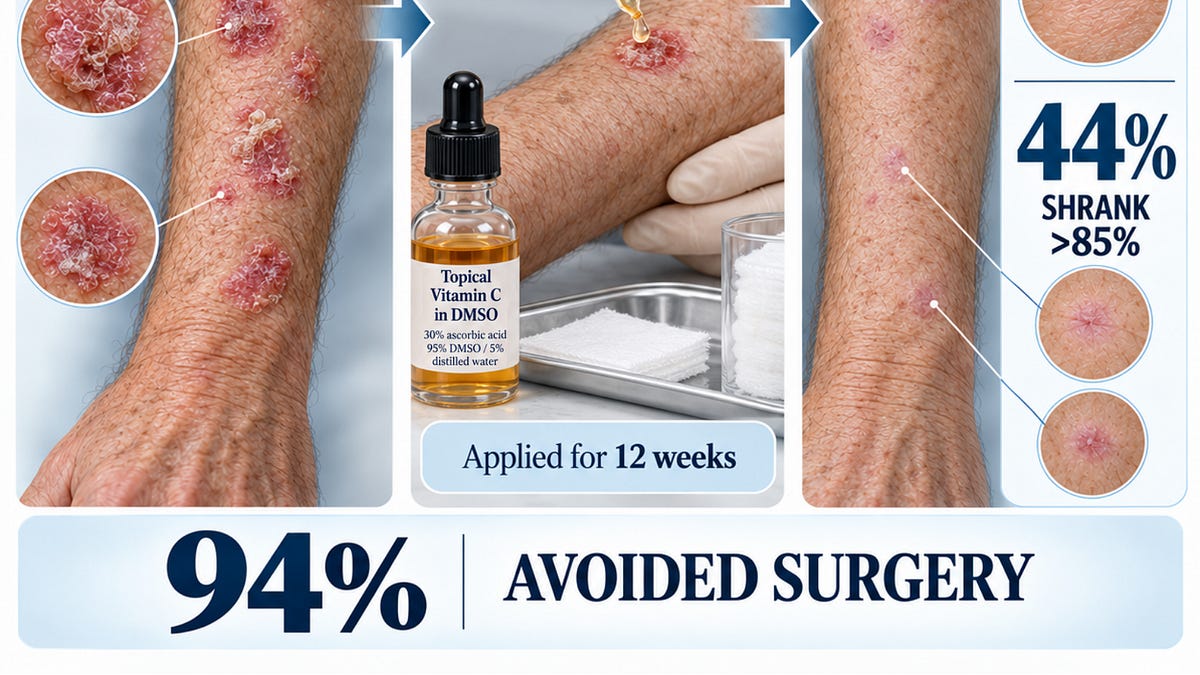
NEW STUDY: Topical vitamin C in DMSO completely ELIMINATED 56% of biopsy-confirmed skin cancers in just 12 weeks.
44% of the squamous cell carcinoma lesions SHRANK by over 85%.
94% of patients were able to AVOID surgery.
The average cancer lesion size dropped 71%.
The treatment was 30% ascorbic acid in a 95% DMSO/5% distilled-water solution, applied twice daily for 12 weeks.
DMSO was used as a skin-penetration enhancer, helping the vitamin C pass through the outer skin barrier and reach the lesion more effectively.
https://www.thefocalpoints.com/p/study-topical-vitamin-c-in-dmso-eliminated
Follow @zeeemedia
Website | X | Instagram | Rumble
Scientists have now developed a way to genetically engineer lettuce with pig DNA to make plant-based meat taste like meat
The is a new 2026 study that inserted pig myoglobin genes into lettuce chloroplasts, which persisted in the lettuce grown from the harvested seeds. “This research follows the British company Moolec, which inserts pig DNA into soybeans to create what they call piggy soy”
‘Since this is all considered gene editing and not genetic modification, it bypasses most regulation and can be sold with little restrictions’
I have no words for how depraved the minds of these Christ-hating transhumanist idiots are.
Follow @zeeemedia
Website | X | Instagram | Rumble
🌡 🇫🇷 🏬 Hundreds of French supermarkets have been hit by a cyber attack that caused their fridges and freezers to heat up, spoiling fresh and frozen food estimated to be worth millions of euros.
Hackers reportedly gained control of the software that regulates the temperatures of the refrigeration units, forcing some to warm to 50C (120F) overnight.
Almost 100 of the chain's stores were targeted, while between 150 and 200 Intermarché supermarkets were affected, according to the AFP news agency.
Intermarché said its fridges had heated up to 50C for six hours overnight into Monday, and the retailer had thrown away all the affected food to avoid health risks, the Reuters news agency reported.
Prosecutors in Paris confirmed the cyber attack and indicated it had prompted fire outbreaks, according to AFP.
📝 Rushi: "We’ve connected so much of our physical world to the internet that apparently even keeping milk cold is now a cybersecurity problem."
...

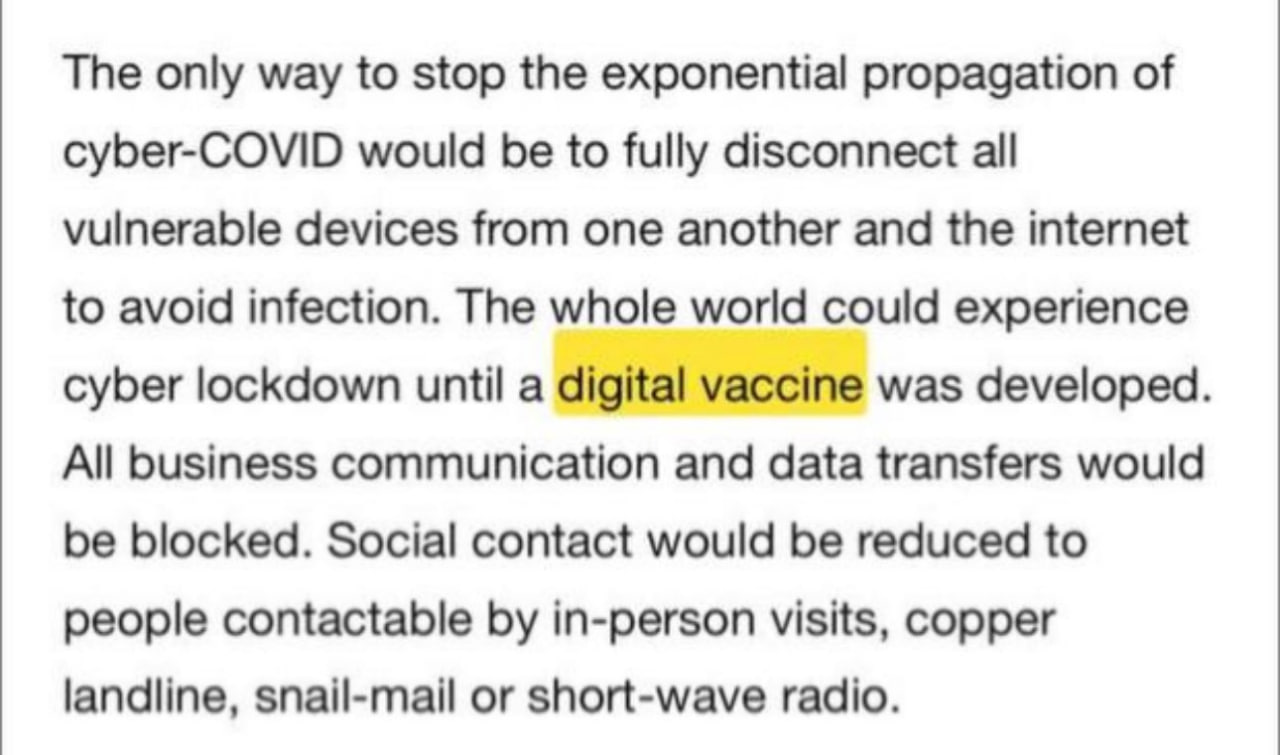
The WEF states that when a global cyber outage occurs from “Cyber COVID”, the whole world could (AKA will) go into cyber lockdown until a “digital vaccine” is developed.
This seems important to raise again when the tech lizards are screaming about an AI apocalypse in unison right now.
Follow @zeeemedia
Website | X | Instagram | Rumble
The Netherlands government has killed a 2-year-old baby, just one year after the country legalized euthanasia for children under 12.
In 2025, 10,341 people in the Netherlands were euthanized, up nearly 4% from the year before.
According to the Assessment Committee for Late Termination of Pregnancy and Termination of Life in Newborns and Children Aged 1 to 12 Years, the baby had "both mental and physical" disabilities, so they decided it was best to kill the child.
"The child had multiple, very severe disabilities, both mental and physical, and the prognosis was that the child would be dependent on support with all activities of daily living for the rest of their life."
After getting consent from the child's parents, the baby was killed.
https://nltimes.nl/2026/09/09/first-ever-case-euthanasia-young-child-2-handled-well-dutch-committee
Follow @zeeemedia
Website | X | Instagram | Rumble