
We know what’s coming and we are prepared.

🛢⛽️ Global oil inventories are heading toward RECORD LOWS:
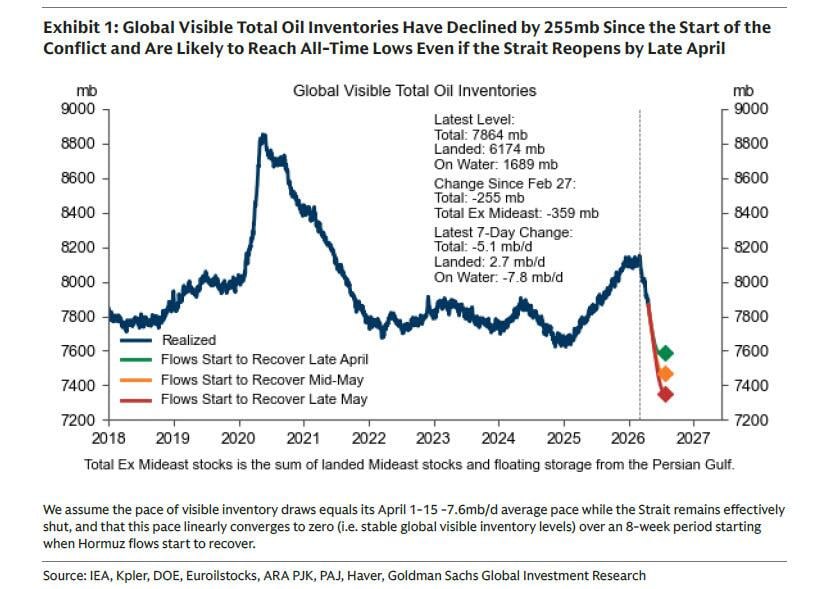
Global visible oil inventories have fallen -255 million barrels since the start of the conflict on February 27, to 7,864 million barrels.
Total estimated oil draws, including non-OECD refined products storage, have accelerated to 10.9 million barrels per day in April, the largest monthly draws on record since 2017.
Cumulative estimated draws since the start of the war now stand at 474 million barrels, with Hormuz flows holding at ~10% of normal, or 2.0 million barrels per day.
Meanwhile, even in an optimistic scenario where Strait of Hormuz flows begin recovering by late April, it is unlikely to prevent global visible inventories from reaching all-time lows, according to Goldman Sachs.
As inventories keep falling, physical oil markets are likely to require sharply higher prices for immediate delivery, since buyers cannot wait months for cheaper futures delivery when stocks are running critically low.
Goldman also warns that inventories cannot keep falling forever, and once they approach the minimum level needed to keep global supply chains running, the only way the market can rebalance is by destroying demand.
The global oil buffer is disappearing fast, which means oil prices are set to rise further.
🔗 Global Markets Investor
NEW STUDY: Topical vitamin C in DMSO completely ELIMINATED 56% of biopsy-confirmed skin cancers in just 12 weeks.
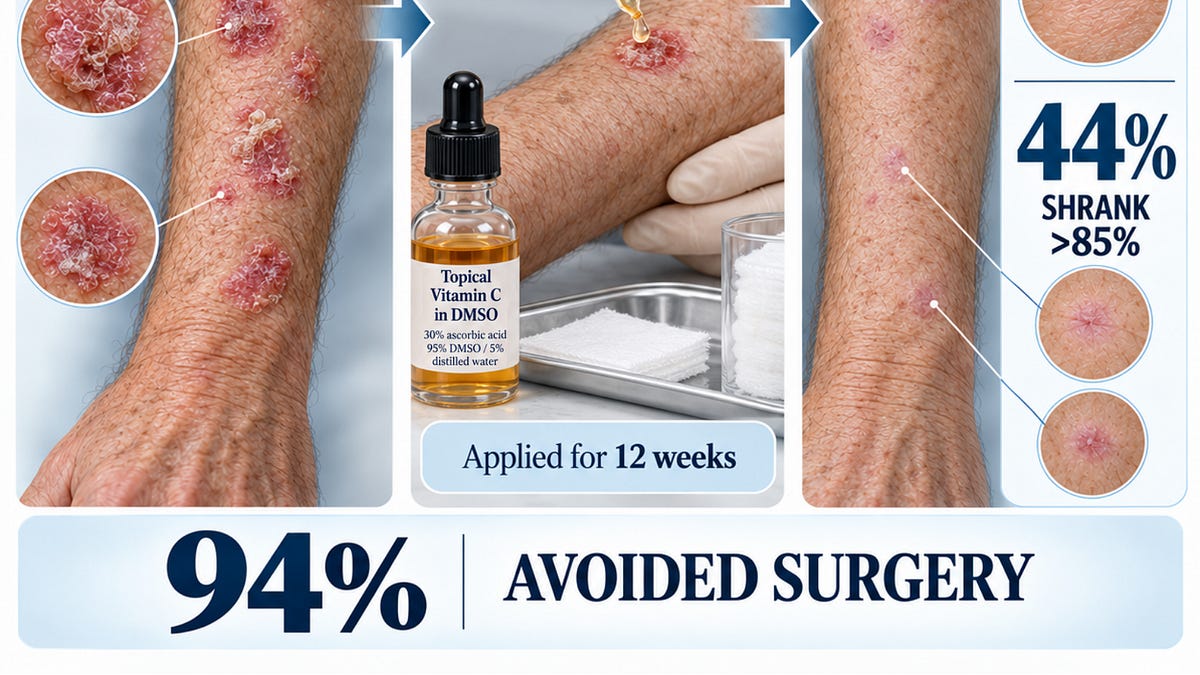
44% of the squamous cell carcinoma lesions SHRANK by over 85%.
94% of patients were able to AVOID surgery.
The average cancer lesion size dropped 71%.
The treatment was 30% ascorbic acid in a 95% DMSO/5% distilled-water solution, applied twice daily for 12 weeks.
DMSO was used as a skin-penetration enhancer, helping the vitamin C pass through the outer skin barrier and reach the lesion more effectively.
https://www.thefocalpoints.com/p/study-topical-vitamin-c-in-dmso-eliminated
Follow @zeeemedia
Website | X | Instagram | Rumble
Scientists have now developed a way to genetically engineer lettuce with pig DNA to make plant-based meat taste like meat
The is a new 2026 study that inserted pig myoglobin genes into lettuce chloroplasts, which persisted in the lettuce grown from the harvested seeds. “This research follows the British company Moolec, which inserts pig DNA into soybeans to create what they call piggy soy”
‘Since this is all considered gene editing and not genetic modification, it bypasses most regulation and can be sold with little restrictions’
I have no words for how depraved the minds of these Christ-hating transhumanist idiots are.
Follow @zeeemedia
Website | X | Instagram | Rumble
This is something that needs to be spoken about openly, as these sytems grow more insatiable it is going to change for the worse not better. You can clearly see the sites are all either news or pharmacy, this is about worldwide exploitation especially in western society concerning young adults and even, especially, children who have been abused or incarcerated unfairly.
This is typically because their lives have already been deemed unwanted as they have been put into foster care or sex trafficked then risk being put into forced pschiatric facilities for the rest of their lives (where new drugs are tested and experimented on youth) or behavioral labour camps (which make a profit).
The excuse is for learning disabilities or for mental illnesses (which are solely reaction s to their abuse not an illness- ie pysch fraud) is the sickest form of exploitation imaginable and yet it is happening in America and the UK and has been happening for decades solely because everyone is complicit. All programs shown are operative in America and The UK.
...

🌡 🇫🇷 🏬 Hundreds of French supermarkets have been hit by a cyber attack that caused their fridges and freezers to heat up, spoiling fresh and frozen food estimated to be worth millions of euros.
Hackers reportedly gained control of the software that regulates the temperatures of the refrigeration units, forcing some to warm to 50C (120F) overnight.
Almost 100 of the chain's stores were targeted, while between 150 and 200 Intermarché supermarkets were affected, according to the AFP news agency.
Intermarché said its fridges had heated up to 50C for six hours overnight into Monday, and the retailer had thrown away all the affected food to avoid health risks, the Reuters news agency reported.
Prosecutors in Paris confirmed the cyber attack and indicated it had prompted fire outbreaks, according to AFP.
📝 Rushi: "We’ve connected so much of our physical world to the internet that apparently even keeping milk cold is now a cybersecurity problem."
...

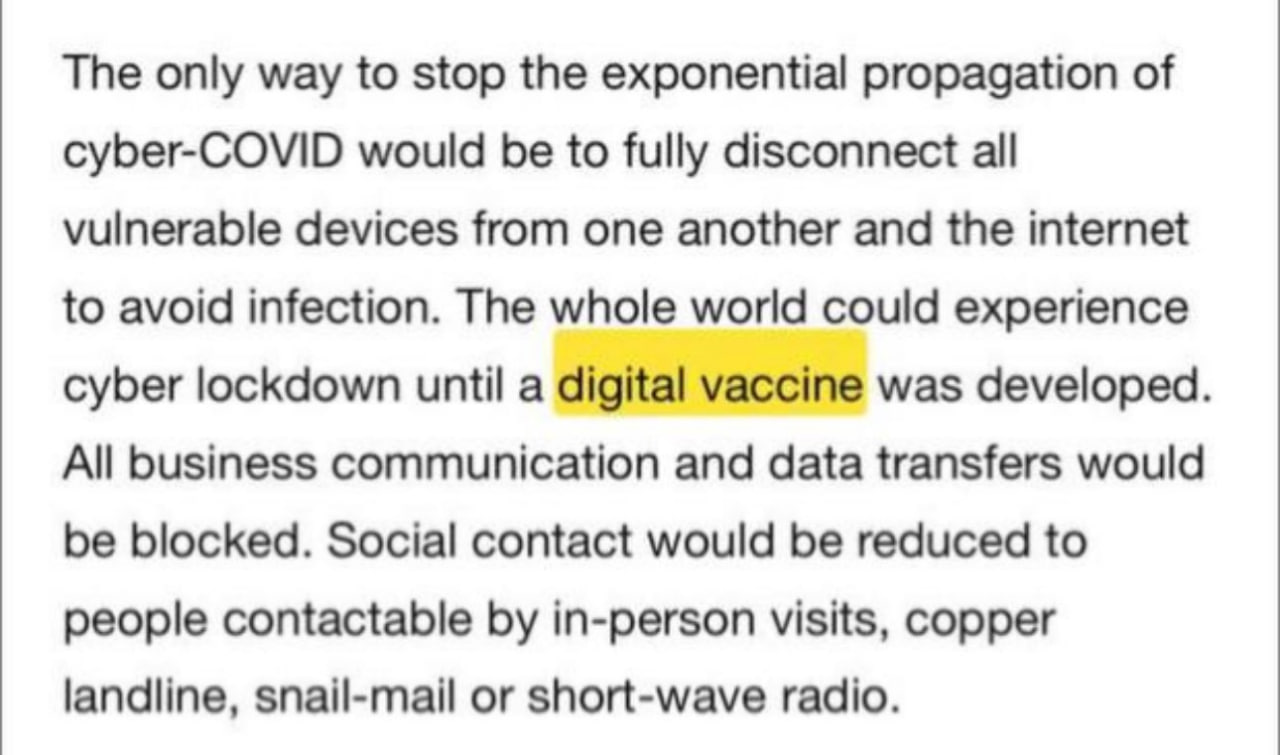
The WEF states that when a global cyber outage occurs from “Cyber COVID”, the whole world could (AKA will) go into cyber lockdown until a “digital vaccine” is developed.
This seems important to raise again when the tech lizards are screaming about an AI apocalypse in unison right now.
Follow @zeeemedia
Website | X | Instagram | Rumble