

We know what’s coming and we are prepared.

🇺🇸🛢 The most visible oil inventories are about to plummet
Several things need to be noted first before looking at tanker data:
We are still offloading some of the tankers inbound laden with crude. These are temporarily keeping US crude imports elevated. The same VLCCs discharging crude turn into export volumes in 1-2 weeks.
We have an armada of empty VLCCs headed for the US, which will drain US commercial crude inventories dry.
All the while, we will continue to drain product inventories in the US. Petroleum product exports are expected to remain near all-time highs.
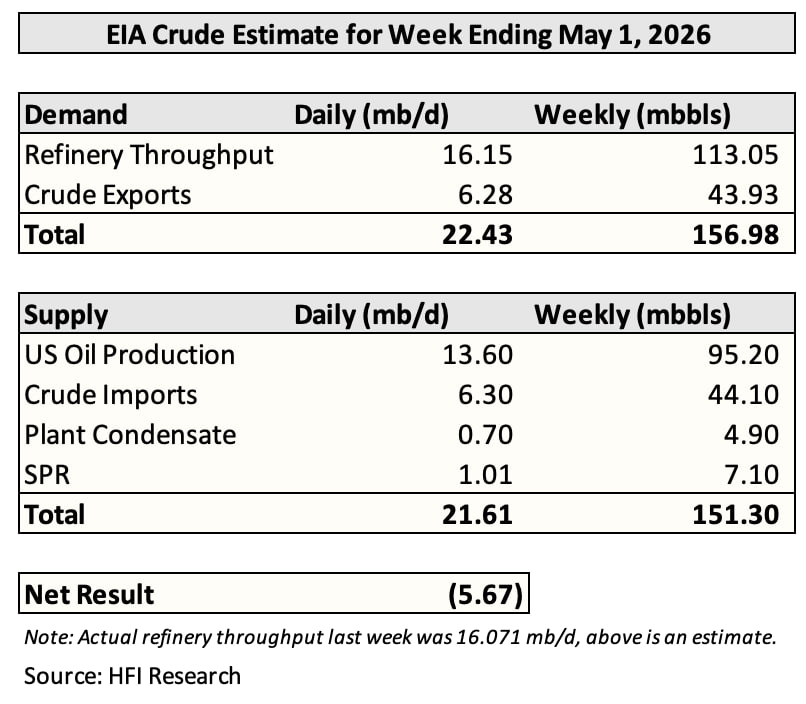
The snapshot above is our preliminary US crude storage estimate for next week, which includes 7.1 million bbls from the SPR. The final SPR release figure could be higher next Monday, so we will have finalized estimates out by then.
What’s not shown above is what happens to US commercial crude storage when 1) US refinery throughput ramps up to 16.8 to 17 million b/d and 2) US crude imports fall to 5.5 million b/d due to lower inbound crude flows.
The net impact on US commercial crude inventories by the middle of May is as high as 12 million bbls.
In essence, there could be EIA oil storage reports showing -10 to -12 million bbls of crude WITH a SPR release of 10 million bbls. This would put the cumulative crude draw at 20 to 22 million bbls.
And since I’m a numbers guy, let’s just say this. Since EIA started publishing the weekly oil data in 1982, there have been 41 weekly crude draws of over 10 million bbls. The largest ever recorded crude draw (commercial + SPR) was on the week of July 28, 2023, and this week’s EIA oil storage report (-13.355 million bbls) already ranks as the 6th largest crude draw in history.
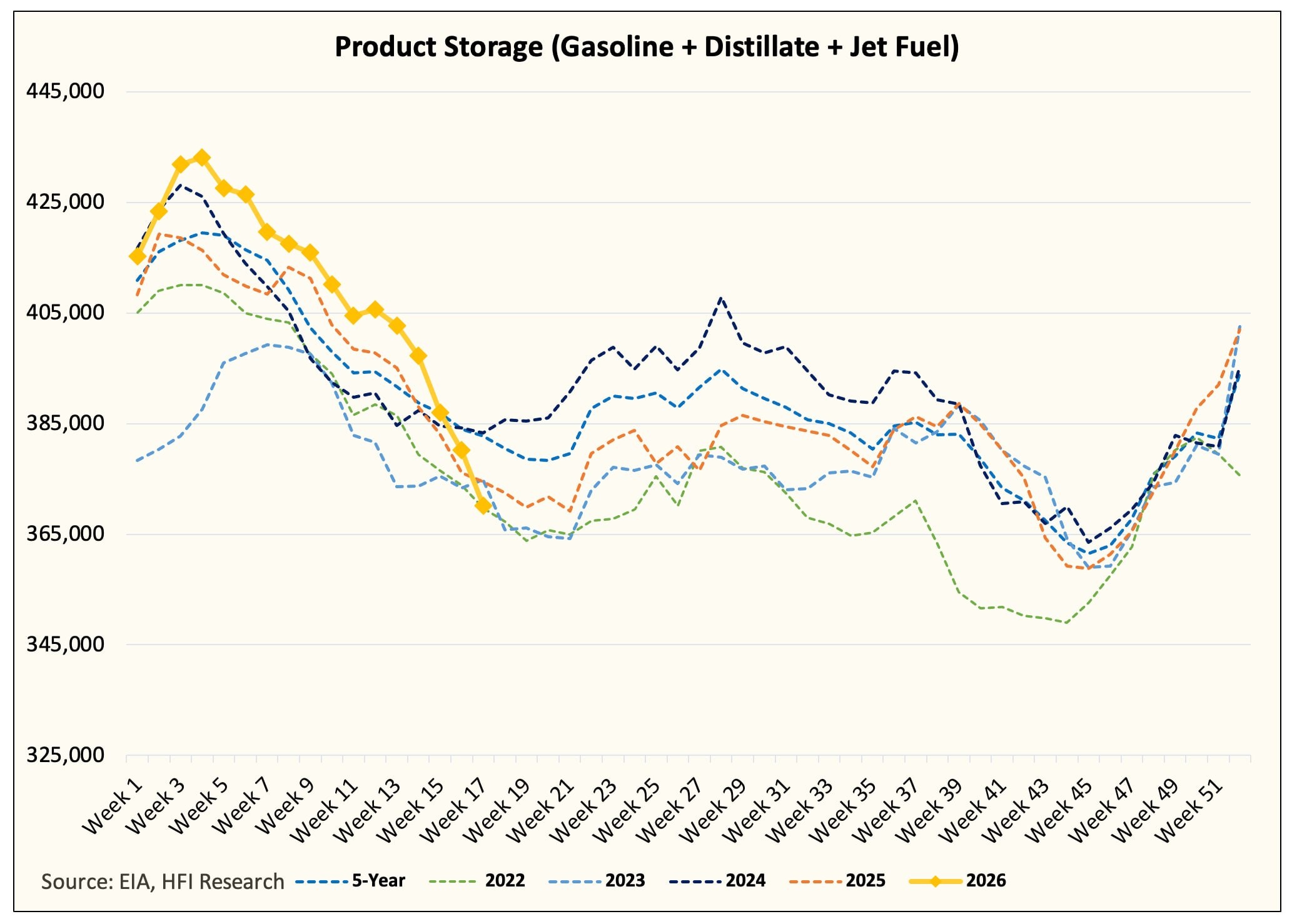
I guess we are really doing this. We are really going to just watch the Strait of Hormuz stay closed, and onshore oil inventories plummet. US product storage is already approaching seasonal lows for this time of year, and the next few weeks will push us into brand-new territory.
I still see commentary about comparisons to 2022. The absurdity of those comments fails to recognize that this is not even remotely similar.
🇺🇸 Teenagers are now facing charges after doing a ding-dong ditch prank with a twist. They showed up in masks, wearing tactical gear and a rifle, or what looks like a rifle.
Two #Delaware teenagers, aged 16 and 17, faced charges after knocking on doors in New Castle while wearing tactical-style vests and carrying what appeared to be a rifle, police said.
This could’ve ended so badly..
Follow main channel -> LiveLeak
Follow private channel -> LiveLeak Private

🌆 Market News Digest
[Oct 20, 2026 EST]
🔥 Top Stories
• US–Iran tensions swing markets — Hormuz tanker fire, Israel warns of renewed strikes, Rubio says talks are hard; oil stayed volatile even as Brent eased below $109
• Anthropic’s massive AI spend shock — WSJ says it may spend >$600B on compute, with huge cloud/Nvidia commitments and >$80B H1 loss
• Trump on Ukraine, Iran and trade — says Ukraine must make a deal, India trade is “pretty close,” and he’s weighing Iran action
⛽ Oil & Energy
• Hormuz tanker fire / mine incident — IRGC says a supertanker carrying >2M barrels caught fire after hitting a mine
• Europe gas >€90 — benchmark tops 2022 levels on supply fears; US diesel prices remain elevated
• NATO and EU security push — NATO adds Black Sea assets; EU doubles down on Arctic security and keeping fossil fuels in the ground
📊 Markets & Macro
• US housing weakens further — starts fell 5.2% and pending sales dropped 7.3% to a record low, pressuring ...
📝 🇪🇺 🇫🇷 Mario Nawfal on X: Europe's riots are just the beginning. The real economic shock hasn't even arrived yet.
I spoke with economist Philip Pilkington about the unrest spreading across France, Italy and Albania.
He thinks we're watching the early stages of something much bigger.
One statistic really caught my attention.
According to Pilkington, France's inflation-adjusted household food consumption has fallen roughly 6.4% since 2022. He suspects the poorest households have suffered far steeper cuts.
Now add another surge in energy prices.
Pilkington pointed to rice futures rising 70% this year, wheat and sugar climbing 40%, and fertilizer shortages threatening next year's harvest.
His prediction is that the worst food inflation could arrive this winter or next spring.
And there's a political problem sitting right on top of it.
Governments across Europe are already deeply unpopular. People are struggling to afford basic necessities, and another prolonged energy ...