

We know what’s coming and we are prepared.

🇮🇱⚔️🇱🇧🇵🇸 Multi-front aggression on Gaza and Lebanon has left Israeli reserve forces on the brink of collapse warns army chief
The Israeli military establishment issued a dire warning to the Knesset on Monday, cautioning that its overstretched reserve forces are teetering on the edge of a total systemic breakdown. As first reported by i24 News, during a classified session of the Foreign Affairs and Defense Committee, Chief of Staff Eyal Zamir told lawmakers that the army's ability to sustain its multi-front aggression—stretching from Gaza to the northern borders with Lebanon—is rapidly eroding.
Zamir urged immediate legislative action to extend mandatory service to 36 months and expand conscription to include the ultra-Orthodox community, describing the current strain on reservists as an "unreasonable burden" that cannot be maintained.
The military's manpower crisis comes as Tel Aviv prepares for a potential expansion of its ground invasion into south Lebanon, despite mounting internal warnings about a "collapsing army." Zamir previously raised "ten red flags" regarding the military's internal stability, highlighting that the failure to regulate Haredi enlistment has left active-duty and reserve units physically and mentally depleted.
As the attacks on Gaza and Lebanon enter their third year, the military chief emphasized that without an immediate influx of thousands of new soldiers, the reserve system—historically the backbone of the Zionist entity's defense—will inevitably "collapse in on itself."
🔗 The Cradle
Reposting - It’s fashion week again:
They’re not just celebrities.
They’re vessels.
What you’re seeing is not fashion, it’s a ritual. A manifestation.
These grotesque outfits and lifeless faces aren’t random.
They’re symptoms of something deeper:
a mental parasite expressing itself through human bodies.
This parasite has no soul, no gender, no form.
It cannot exist alone, it needs a host.
And once it enters, it hijacks.
It speaks through you. Thinks through you. Dresses through you.
That’s what’s happening in front of our eyes.
Pop culture, fashion, “trends”…
They’re not human creations.
They’re tools of mass programming, designed to make you mimic the parasite until it fully replaces you.
These scripted realities, your idols, your influencers, they’re just vessels. Empty dishes.
Hosts for an agenda that is not human.
Be careful what you admire.
Be careful what you wear.
Learn the patterns. Learn the programming.
Because the ones pulling the strings are ...
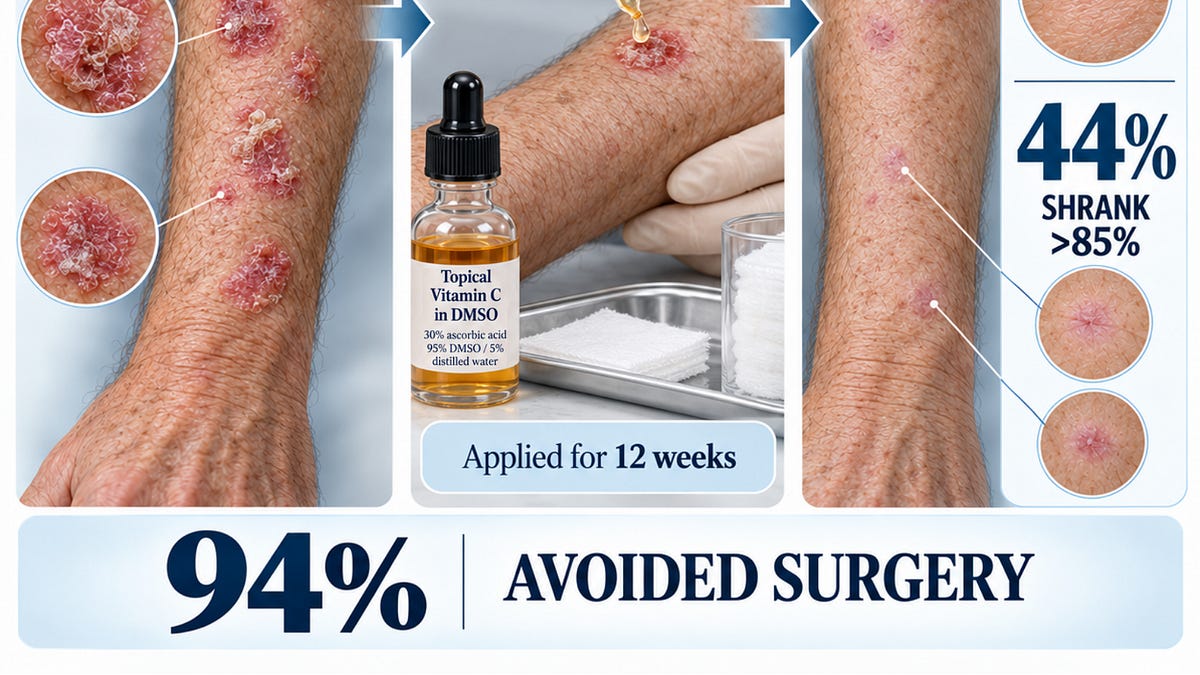
NEW STUDY: Topical vitamin C in DMSO completely ELIMINATED 56% of biopsy-confirmed skin cancers in just 12 weeks.
44% of the squamous cell carcinoma lesions SHRANK by over 85%.
94% of patients were able to AVOID surgery.
The average cancer lesion size dropped 71%.
The treatment was 30% ascorbic acid in a 95% DMSO/5% distilled-water solution, applied twice daily for 12 weeks.
DMSO was used as a skin-penetration enhancer, helping the vitamin C pass through the outer skin barrier and reach the lesion more effectively.
https://www.thefocalpoints.com/p/study-topical-vitamin-c-in-dmso-eliminated
Follow @zeeemedia
Website | X | Instagram | Rumble


Why did hospitals push remdesivir and fight doctors using ivermectin?
If Fauci's drug was used government covered the entire hospital stay going over budget, so it was a given administrators would give it to every patient—just like there was a huge bonus for each patient who was diagnosed with COVID or ventilated for a prolonged period.
Here, I reveal why the US spent the most money on COVID-19, yet had the highest death rate, the human cost of these horrible policies, the unbelievable experiences many patients went through, and what we can do to have a safer hospital experience.
midwesterndoctor.com/p/how-hospital…
https://www.midwesterndoctor.com/p/how-hospitals-turned-on-their-patients