

We know what’s coming and we are prepared.

🇺🇸🚜🛢 Biggest Diesel Shock Since 2022 Deals Another Blow to US Farmers
While US farmers brace for higher fertilizer and chemical bills tied to turmoil in the Middle East, another expense is already taking a bite out of razor-thin margins: diesel fuel.
Prices for the fuel that powers tractors, combines and grain trucks have surged as the war in Iran disrupted global oil flows, catching many producers who expected lower energy costs this year off guard. In Illinois, the top US soybean-producing state, farm diesel averaged a record $5.41 a gallon at the start of May, nearly double the price a year earlier.
Current costs, which have moderated some in recent weeks amid prospects for a US-Iran peace deal, still rival levels last seen in 2022 after Russia’s invasion of Ukraine, adding a fresh burden for farmers already facing weak crop prices and mounting financial pressure.
Marty Richardson, who grows corn and soybeans and raises cattle in Missouri, experienced the sticker shock when he recently ordered diesel after running through supplies he bought in January for spring planting.
“I usually get 8,000 gallons, and I got 4,000 for what I paid for the 8,000 gallons in January,” Richardson said. The fuel cost him about $4.74 a gallon. “That is the killer out here right now.”
The spike in diesel, combined with higher prices for fertilizer and crop-protection chemicals produced at facilities in the Middle East, is expected to further eat away at profit margins that were already running negative for the average corn farmer. Data from the US Department of Agriculture show that fuel, fertilizer and pesticides together typically account for about 15% of total production expenses for farmers annually.
Even if the US and Iran finalize a peace deal, it will take time for the war-related premiums on those input prices to dissipate, said Wesley Davis, chief agriculture economist at Meridian Ag Advisors.
🔗 https://finance.yahoo.com/sectors/energy/articles/biggest-diesel-shock-since-2022-110000336.html
Scientists have now developed a way to genetically engineer lettuce with pig DNA to make plant-based meat taste like meat
The is a new 2026 study that inserted pig myoglobin genes into lettuce chloroplasts, which persisted in the lettuce grown from the harvested seeds. “This research follows the British company Moolec, which inserts pig DNA into soybeans to create what they call piggy soy”
‘Since this is all considered gene editing and not genetic modification, it bypasses most regulation and can be sold with little restrictions’
I have no words for how depraved the minds of these Christ-hating transhumanist idiots are.
Follow @zeeemedia
Website | X | Instagram | Rumble
“In every single dose of an MMR shot, there are literally, literally millions of pieces from the cultured cell line of an aborted fetus in every single injection.” — AARON SIRI
THIS IS WHY RELIGIOUS EXEMPTIONS MATTER.
Yet in states that have eliminated religious exemptions, parents can be forced to choose between violating their religious and ethical beliefs and their child’s ability to attend school.
🇺🇸Join👉 @SGTnewsNetwork
📎 X (Twitter)▪️Truth Social
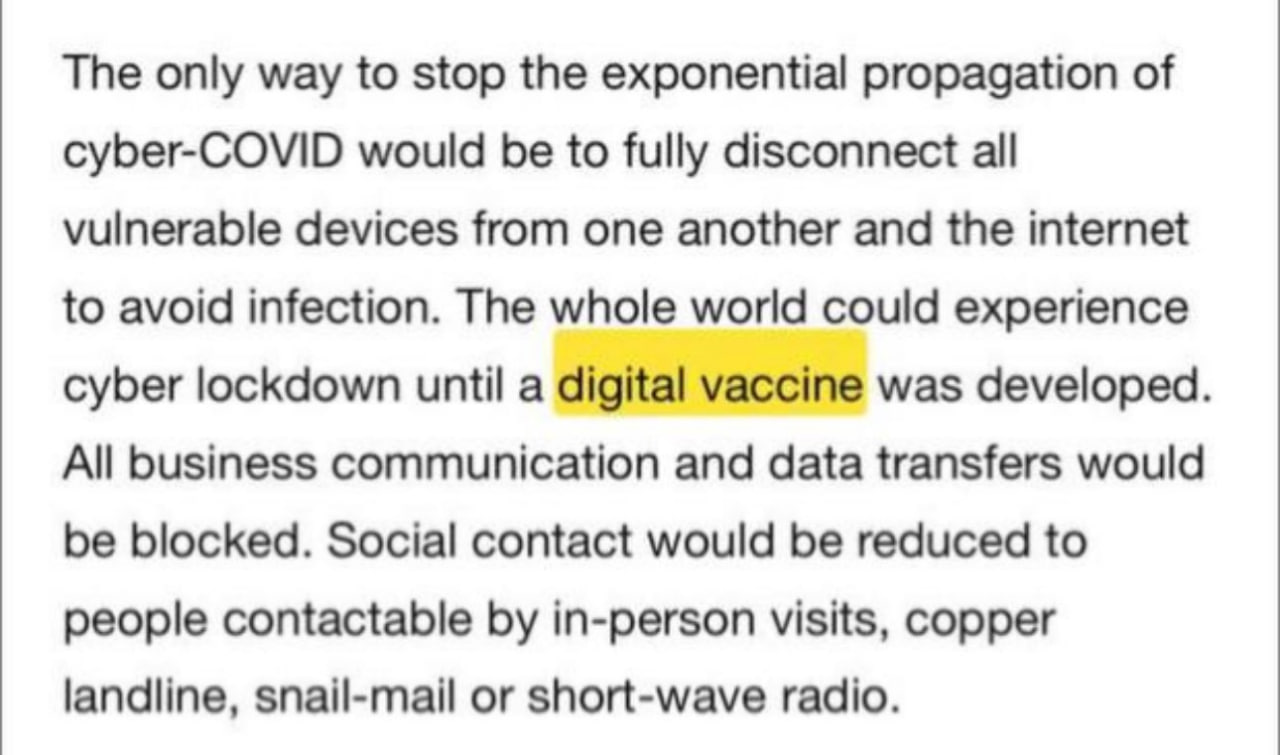
The WEF states that when a global cyber outage occurs from “Cyber COVID”, the whole world could (AKA will) go into cyber lockdown until a “digital vaccine” is developed.
This seems important to raise again when the tech lizards are screaming about an AI apocalypse in unison right now.
Follow @zeeemedia
Website | X | Instagram | Rumble
The Netherlands government has killed a 2-year-old baby, just one year after the country legalized euthanasia for children under 12.
In 2025, 10,341 people in the Netherlands were euthanized, up nearly 4% from the year before.
According to the Assessment Committee for Late Termination of Pregnancy and Termination of Life in Newborns and Children Aged 1 to 12 Years, the baby had "both mental and physical" disabilities, so they decided it was best to kill the child.
"The child had multiple, very severe disabilities, both mental and physical, and the prognosis was that the child would be dependent on support with all activities of daily living for the rest of their life."
After getting consent from the child's parents, the baby was killed.
https://nltimes.nl/2026/09/09/first-ever-case-euthanasia-young-child-2-handled-well-dutch-committee
Follow @zeeemedia
Website | X | Instagram | Rumble