We know what’s coming and we are prepared.

Russia has suffered another Internet outrage, this time triggered by a power outage. This is not a new phenomenon and is possibly linked to cyber-warfare. Here are three articles for context:
30 Jan 2024
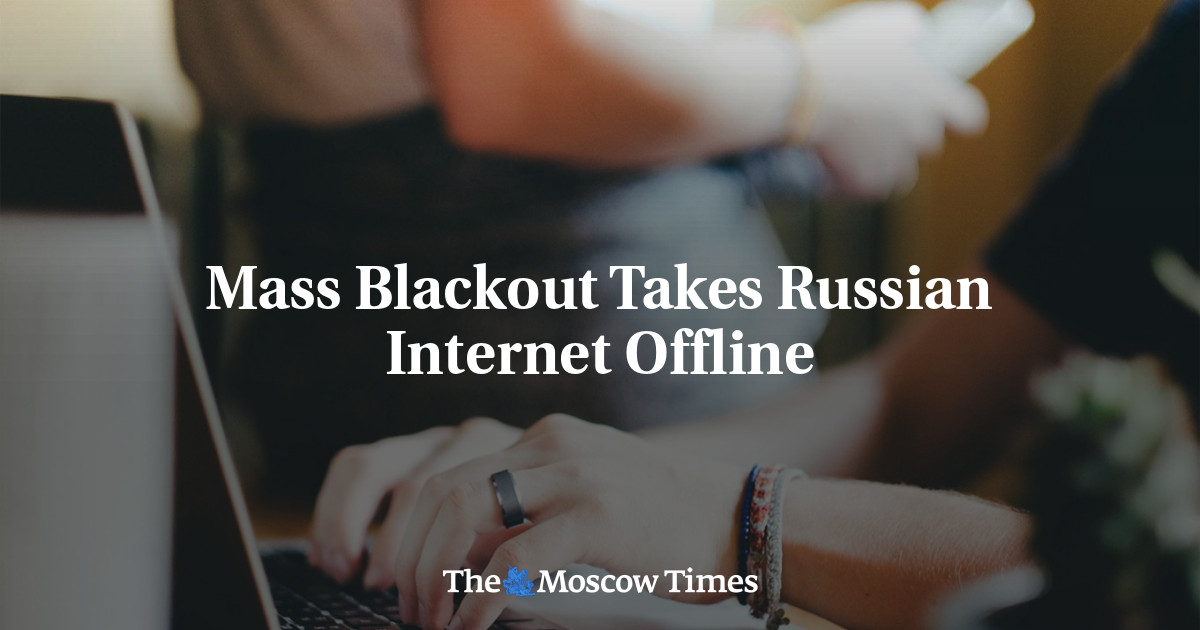
"Hundreds of websites on the Russian-speaking internet were inaccessible Tuesday evening as a DNSSEC failure took .ru and .рф domains offline.
Users both inside and outside Russia complained of outages of major web-based platforms like Tinkoff Bank, online marketplaces Avito and Wildberries, search engine Yandex and telecoms provider MTS": https://www.themoscowtimes.com/2024/01/30/mass-blackout-takes-russian-internet-offline-a83919
7 March 2022: Russia, Blocked From the Global Internet, Plunges Into Digital Isolation
Russian authorities and multinational companies have erected a digital barricade between the country and the West, erasing the last remnants of independent information online.
www.nytimes.com/2022/03/07/technology/russia-ukraine-internet-isolation.html
11 March 2022
Is Russia really about to cut itself off from the internet? And what can we expect if it does?
The invasion of Ukraine has triggered a significant digital shift for Russia. Sanctions imposed by governments around the world — together with company closures or mothballing — have significantly impacted the country.
A plethora of events have escalated the invasion into the digital world, with cyber attacks, cyber criminals taking sides, and even an IT army of civilians being mobilised by Ukraine.
The sanctions imposed on Russia have not only directly hit its economy (and by extension the global economy), but are now also threatening Russian citizens' access to the internet.
It's expected the nation will limit its reliance on the global internet very soon. Although a complete disconnection isn't yet confirmed, even a partial disconnection would be a difficult task. And the repercussions of Russia's growing digital isolation for its citizens will be immense.
https://www.abc.net.au/news/2022-03-11/russia-putin-cut-the-internet/100899956

If you missed it👇
Top AI Executives are now officially anticipating a large-scale event, most likely a cyberattack, that shuts down access to financial services, internet connectivity, and even power and water. We need to prepare for this scenario right now.
Watch here:
Follow @zeeemedia
Website | X | Instagram | Rumble