

We know what’s coming and we are prepared.

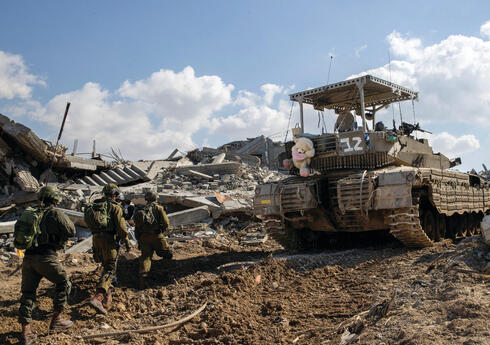
🪖 🇮🇱 🇮🇱 "The IDF is preparing for the enormous and complex challenge of manpower management in accordance with needs that have not been the same since the establishment of the state. As has been published here on several occasions, the era of striving for a small, lethal and cheap army is over The regular service and the reduction of the load on the reserve system: the number of casualties and the wounded in the various arenas and the preparation for possible and immediate scenarios, led the IDF to present last night (Wednesday) a comprehensive plan to increase its force orders at all levels
🔶️ Of the 564 casualties whose names have been released so far, 55 percent are reservists. The IDF has treated approximately 13,000 wounded soldiers so far in the war - 2,830 of them were hospitalized, and the rest were released from the hospitals after a short treatment. These figures create a large gap in the number of fighters and it needs to be filled immediately.
🔶️ The army wants to increase the number of troops in the fighting battalions by 120 percent in the coming year, with one of the urgent tasks being to train commanders, to replace those who have fallen. One of the solutions launched is the release of regular soldiers directly into the reserves, while activating Order 8. But the strategic move that will be valid even after 2024 is the extension of regular service to three years among men and women in positions that until now required two years and eight months of service
🔶️ The age of release from reserve service will also increase from 40 to 46 for soldiers, and to 50 for officers. The age of volunteering will be extended to 66. In light of the unprecedented volunteering figures in the war - 50 thousand male and female volunteers - this is a significant addition
🔶️ Another change is in the reserve law. Today, reserve servicemen and women are called for operational employment once every three years. After the change in the law, the dosage will increase for operational employment per year. The three-year model stated that a reservist would do one to two weeks of training a year and 21 days of operational employment the following year and the following year a short training of a few days. In total the average was ten days a year. From now on the number will jump fourfold, and of course also at a higher risk, because the arenas are hotter.
🔶️ In the framework of the discrimination between parts of Israeli society, the issue of reserves is of particular critical importance. In the last four months, hundreds of thousands of people were recruited - 287 thousand during the peak period. No less than 40 thousand women (!) were part of the largest reserve recruitment in the country's history. Each and every one of them shouted "I am here" and then "after me" and together they gave the bleeding country inspiration and spirit. Some jumped without waiting for orders, and many did not agree to hear about returning home before the missions were completed
🔶️ However, the problem is deeper and mainly value in essence. The shortages in the ranks of the regular army, for example, and the lack of news on the issue of equality in the burden, are leading to moves that are already eroding the high motivation for combat service, which appeared - in a big way - from the beginning of the war. Early recruitment of prep school students, for example, while the ultra-orthodox youth are left out of the picture. Now it cannot be claimed that "the army does not need them". He needs them all"
🇲🇽- Mexican Cartel Drone Operator seen stalking a Mexican Marine Convoy in Mazatlán.
This isn’t much of a surprise, Cartel members have reportedly been joining the Ukrainian Foreign Legions en masse to hone drone operation and close quarters combat skills.
Since many of them are starting to return home, and now training other members of their cartels, i wouldn’t be shocked to see a new level of militarization in these organizations.
📝 🇪🇺 🇫🇷 Mario Nawfal on X: Europe's riots are just the beginning. The real economic shock hasn't even arrived yet.
I spoke with economist Philip Pilkington about the unrest spreading across France, Italy and Albania.
He thinks we're watching the early stages of something much bigger.
One statistic really caught my attention.
According to Pilkington, France's inflation-adjusted household food consumption has fallen roughly 6.4% since 2022. He suspects the poorest households have suffered far steeper cuts.
Now add another surge in energy prices.
Pilkington pointed to rice futures rising 70% this year, wheat and sugar climbing 40%, and fertilizer shortages threatening next year's harvest.
His prediction is that the worst food inflation could arrive this winter or next spring.
And there's a political problem sitting right on top of it.
Governments across Europe are already deeply unpopular. People are struggling to afford basic necessities, and another prolonged energy ...
🇨🇦🇨🇦🗳 Alberta votes on leaving Canada; separatist movement likely to outlast expected defeat
Alberta holds a nonbinding referendum on Monday on whether the western province should secede from Canada, a debate many believe will not be settled by what is widely expected to be a defeat for the separatist cause.
Polls have consistently shown that a majority of Alberta voters oppose splitting from Canada. Economic grievances have fueled the independence campaign in the province, which is home to 5 million people and slightly smaller than Texas despite having one-sixth the population.
The Alberta separatist movement adds to the pressures on Canadian Prime Minister Mark Carney, who has made defending Canada's sovereignty a central mission as he confronts US tariffs and President Donald Trump's repeated calls for Canada to become the 51st state.
Many Alberta separatists believe the Liberal Party-led federal government in Ottawa has constrained the Conservative-governed ...
My jaw literally dropped listening to this
There is a Muslim pilot who works for United Airlines that regularly makes pro-terrorist organizations posts on his social media
The Muslims name is Ibrahim Mossallam. He works on the Board of CAIR New York, which is linked to the Muslim Brotherhood
He made an October 7, 2023 Facebook post calling the Hamas attacks “resistance by a brave people.” United suspended him with pay while investigating but the Pilots Union got him his job back and he went back to flying planes in America
Since then the pilot has been temporarily resuspended for flying because of his extreme religious beliefs and posts but he is 100% still employed. He is still getting paid on suspension
I looked into this guy and he is VERY involved in Muslim organizations
- CAIR-NY lists him as Board Vice-President and describes him as a professional international airline pilot who is “very active in shaping the Muslim youth community.”
- He has also been listed as a board ...