

We know what’s coming and we are prepared.

🇺🇸🇮🇷🏦 - Iran is attacking the funding source of the US empire… the bond market
Their plan is quite simple: create a massive supply shortage, which will increase inflation and, as a result, drive surging interest rates that crash the US economy.
The US went into the war in pretty bad shape:
- Debt-to-GDP of over 120%
- Deficits of 6% of GDP
- Rising unemployment
But 1 month of Hormuz being closed made it worse:
- 10-year yield is up ~0.5%
- US endured the weakest Treasury auction in over 3 years
- With ~60% of auctions having a higher than expected yield
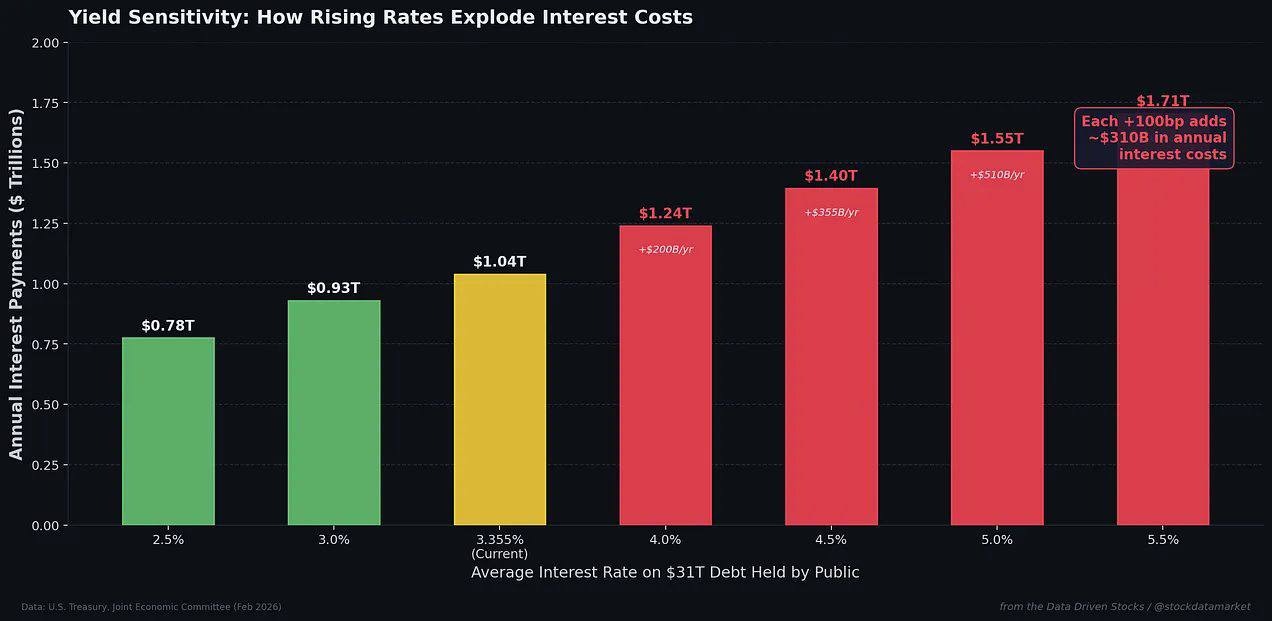
For every 1% increase in interest rates, interest expenses surge by ~$310B annually. And because the US government is mainly financed on the short end, interest rate increases directly translate into higher deficits.
Trump can declare victory as often as he wants, but if Hormuz remains closed, bond yields will spike and crush the US economy… dealing a devastating blow to an already declining empire.
🔗 Lukas Ekwueme
@CIG_telegram
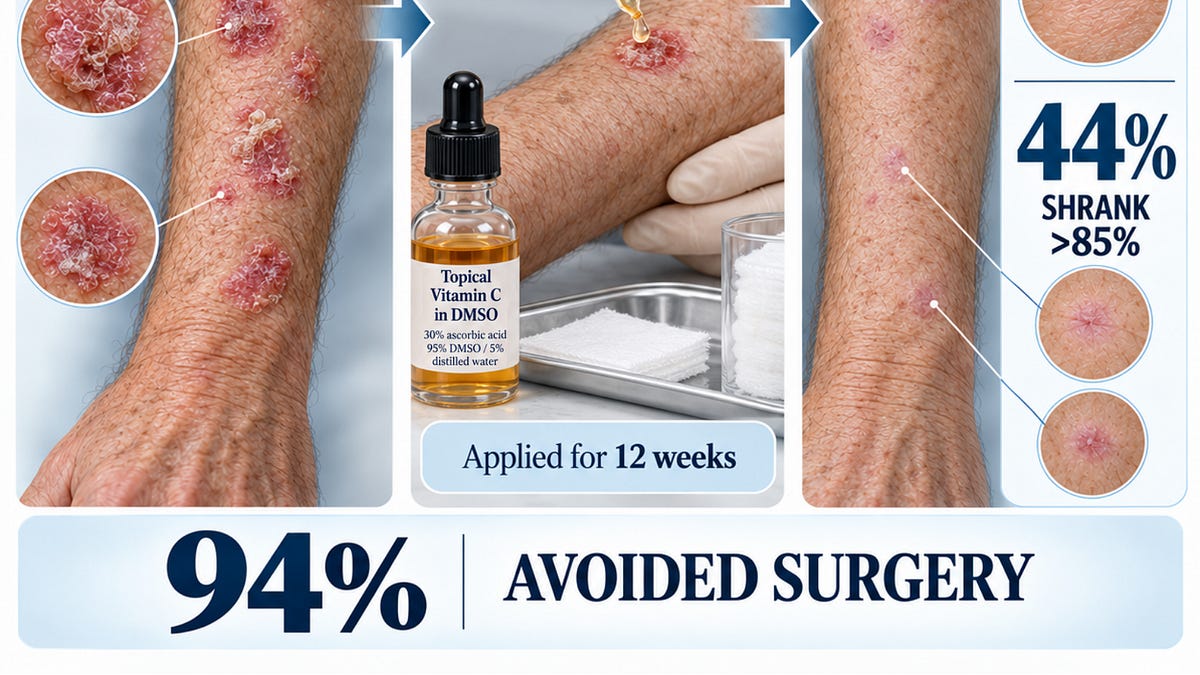
NEW STUDY: Topical vitamin C in DMSO completely ELIMINATED 56% of biopsy-confirmed skin cancers in just 12 weeks.
44% of the squamous cell carcinoma lesions SHRANK by over 85%.
94% of patients were able to AVOID surgery.
The average cancer lesion size dropped 71%.
The treatment was 30% ascorbic acid in a 95% DMSO/5% distilled-water solution, applied twice daily for 12 weeks.
DMSO was used as a skin-penetration enhancer, helping the vitamin C pass through the outer skin barrier and reach the lesion more effectively.
https://www.thefocalpoints.com/p/study-topical-vitamin-c-in-dmso-eliminated
Follow @zeeemedia
Website | X | Instagram | Rumble
Scientists have now developed a way to genetically engineer lettuce with pig DNA to make plant-based meat taste like meat
The is a new 2026 study that inserted pig myoglobin genes into lettuce chloroplasts, which persisted in the lettuce grown from the harvested seeds. “This research follows the British company Moolec, which inserts pig DNA into soybeans to create what they call piggy soy”
‘Since this is all considered gene editing and not genetic modification, it bypasses most regulation and can be sold with little restrictions’
I have no words for how depraved the minds of these Christ-hating transhumanist idiots are.
Follow @zeeemedia
Website | X | Instagram | Rumble
🇮🇱 Israel's New Grand-Strategy;
Excerpts from an article published by the Institute for National Security Studies (INSS), a think tank funded by the Tel Aviv University:
'The United States is a “declining power” and, given its ongoing social and political shifts, will soon abandon Israel in any event.'
'Severing ties with the United States is therefore not only inevitable, but essential to Israel’s independence.'
'The state’s Jewish identity takes precedence over its democratic system of government.'
'any arrangement with Arab actors is temporary and deceptive'
'War is necessary, and preventive war is preferable because it secures a significant achievement at the outset.'
'most Arab states are not genuine nation-states … undermining their stability is viewed as a natural process, one that Israel can manage more effectively than it can contend with strong nation-states, and one that it should even encourage.'
'Defense is established by creating communities and ...
This is something that needs to be spoken about openly, as these sytems grow more insatiable it is going to change for the worse not better. You can clearly see the sites are all either news or pharmacy, this is about worldwide exploitation especially in western society concerning young adults and even, especially, children who have been abused or incarcerated unfairly.
This is typically because their lives have already been deemed unwanted as they have been put into foster care or sex trafficked then risk being put into forced pschiatric facilities for the rest of their lives (where new drugs are tested and experimented on youth) or behavioral labour camps (which make a profit).
The excuse is for learning disabilities or for mental illnesses (which are solely reaction s to their abuse not an illness- ie pysch fraud) is the sickest form of exploitation imaginable and yet it is happening in America and the UK and has been happening for decades solely because everyone is complicit. All programs shown are operative in America and The UK.
...

🌡 🇫🇷 🏬 Hundreds of French supermarkets have been hit by a cyber attack that caused their fridges and freezers to heat up, spoiling fresh and frozen food estimated to be worth millions of euros.
Hackers reportedly gained control of the software that regulates the temperatures of the refrigeration units, forcing some to warm to 50C (120F) overnight.
Almost 100 of the chain's stores were targeted, while between 150 and 200 Intermarché supermarkets were affected, according to the AFP news agency.
Intermarché said its fridges had heated up to 50C for six hours overnight into Monday, and the retailer had thrown away all the affected food to avoid health risks, the Reuters news agency reported.
Prosecutors in Paris confirmed the cyber attack and indicated it had prompted fire outbreaks, according to AFP.
📝 Rushi: "We’ve connected so much of our physical world to the internet that apparently even keeping milk cold is now a cybersecurity problem."
...