

We know what’s coming and we are prepared.

🇺🇸 Blue Owl Capital just disclosed that investors tried to pull 40.7% of one fund and 21.9% of another in a single quarter, and both funds gave the same answer, you can only have 5% back, and everyone else waits in line.
This is a bank run, not a normal withdrawal.
Wall Street spent the last decade selling millions of investors on something called semi-liquid private credit, higher yields, steady income and the promise you could get your money back every quarter if you needed it. What they buried in the fine print was what happens when too many people try to leave at the same time.
Analysts who have covered private credit for decades say nothing on this scale has ever been reported before at any major private credit manager.
These funds do not hold stocks you can sell on a Tuesday afternoon, they hold private loans to mid sized companies that cannot be liquidated quickly without destroying the price for every investor still trapped inside.
This product was originally designed for pension funds with decade long horizons, but it was repackaged and sold to wealthy individuals who believed they could exit whenever things got uncomfortable.
Blue Owl is not alone, BlackRock just capped withdrawals on its $26 billion lending fund, Morgan Stanley received requests for nearly 11% of one fund and could only return 5%, and both Ares and Apollo restricted their funds within days of each other.
The Federal Reserve confirmed three days ago that it is actively monitoring private credit for contagion risks that could spread into the broader banking system, the kind of statement regulators only make when they are genuinely alarmed.
About 40% of the companies that borrowed through these funds currently spend more than they earn, up from 25% just four years ago when rates were near zero.
Managers advertise a default rate below 2% but independent researchers who account for restructured loans and deferred payments put the real number closer to 5% meaning the losses already exist inside these portfolios and simply haven't been officially admitted yet.
Private credit has quietly grown into a $1.8 to $3 trillion industry over the past decade, largely outside the reach of traditional banking regulation, and its first true stress test is happening right now with retail investor money on the line.
The gates are closing one by one, and the only question anyone on Wall Street is asking this morning is whether the funds run out of liquidity before the investors waiting outside run out of patience.
🔗 Stock Market NewsHe
Scientists have now developed a way to genetically engineer lettuce with pig DNA to make plant-based meat taste like meat
The is a new 2026 study that inserted pig myoglobin genes into lettuce chloroplasts, which persisted in the lettuce grown from the harvested seeds. “This research follows the British company Moolec, which inserts pig DNA into soybeans to create what they call piggy soy”
‘Since this is all considered gene editing and not genetic modification, it bypasses most regulation and can be sold with little restrictions’
I have no words for how depraved the minds of these Christ-hating transhumanist idiots are.
Follow @zeeemedia
Website | X | Instagram | Rumble
“In every single dose of an MMR shot, there are literally, literally millions of pieces from the cultured cell line of an aborted fetus in every single injection.” — AARON SIRI
THIS IS WHY RELIGIOUS EXEMPTIONS MATTER.
Yet in states that have eliminated religious exemptions, parents can be forced to choose between violating their religious and ethical beliefs and their child’s ability to attend school.
🇺🇸Join👉 @SGTnewsNetwork
📎 X (Twitter)▪️Truth Social
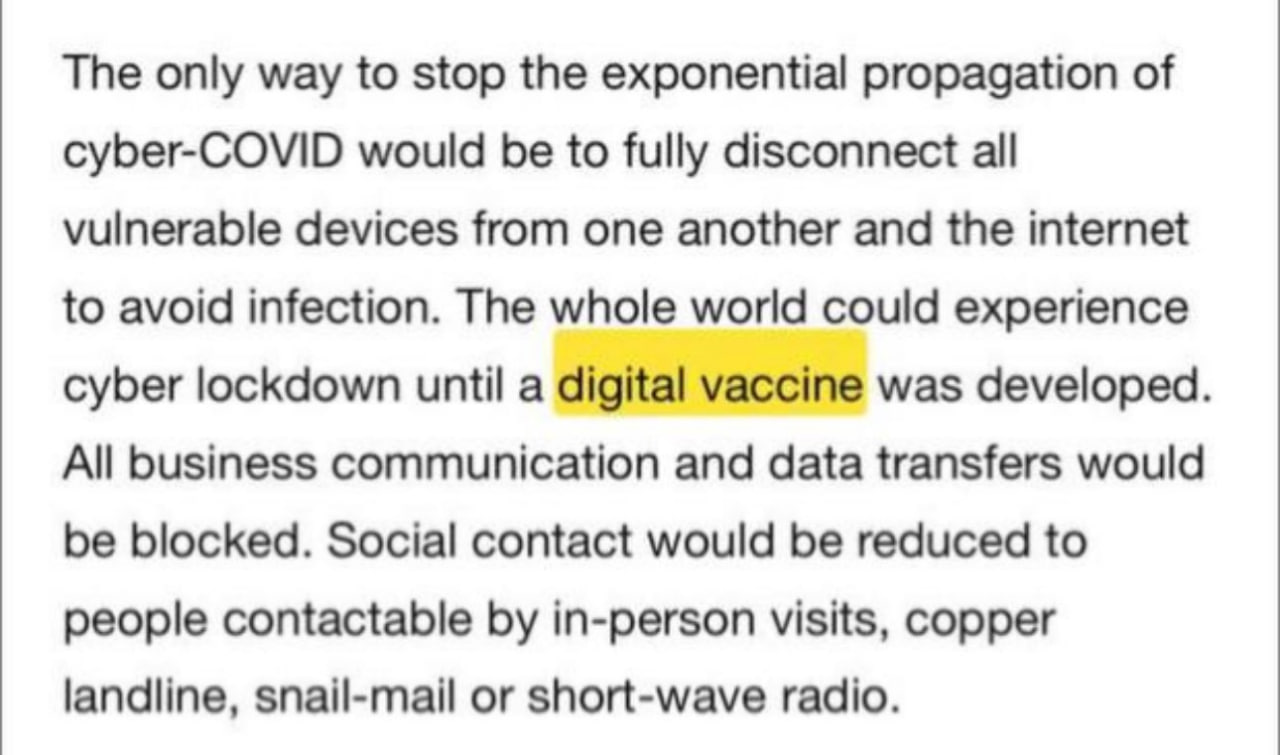
The WEF states that when a global cyber outage occurs from “Cyber COVID”, the whole world could (AKA will) go into cyber lockdown until a “digital vaccine” is developed.
This seems important to raise again when the tech lizards are screaming about an AI apocalypse in unison right now.
Follow @zeeemedia
Website | X | Instagram | Rumble
The Netherlands government has killed a 2-year-old baby, just one year after the country legalized euthanasia for children under 12.
In 2025, 10,341 people in the Netherlands were euthanized, up nearly 4% from the year before.
According to the Assessment Committee for Late Termination of Pregnancy and Termination of Life in Newborns and Children Aged 1 to 12 Years, the baby had "both mental and physical" disabilities, so they decided it was best to kill the child.
"The child had multiple, very severe disabilities, both mental and physical, and the prognosis was that the child would be dependent on support with all activities of daily living for the rest of their life."
After getting consent from the child's parents, the baby was killed.
https://nltimes.nl/2026/09/09/first-ever-case-euthanasia-young-child-2-handled-well-dutch-committee
Follow @zeeemedia
Website | X | Instagram | Rumble